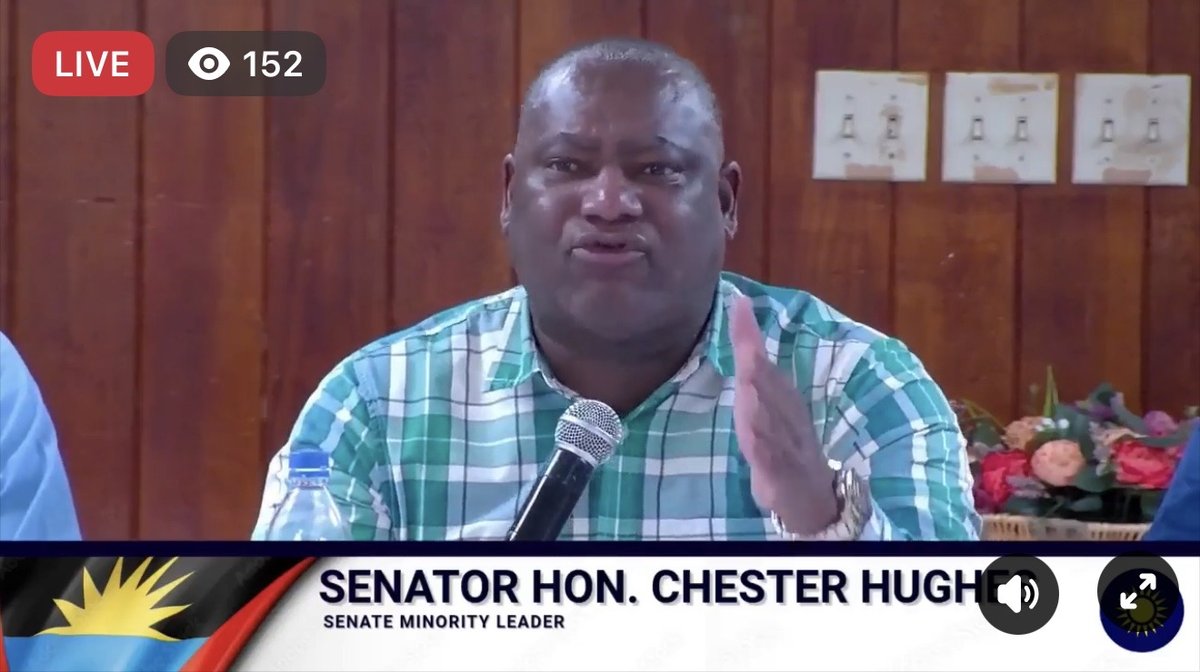
United Progressive Party Senator Chester Hughes has sharply criticized Caribbean leaders for failing to present a coordinated regional response to the United States' proposed third-country deportee arrangement, saying member states have each addressed the issue on their own terms.
According to Antigua News Room, Hughes made the remarks during a UPP town hall meeting, arguing that the matter warranted treatment as a CARICOM-wide concern rather than being left to individual governments to navigate separately.
"At no time have you heard CARICOM discuss this issue as a major Caribbean issue," Hughes said. "They've all taken individual positions as regional leaders instead of taking a collective position and discussing the matter collectively."
Hughes noted that Caribbean leaders had recently convened but said the deportee proposal was not elevated as a significant regional priority during those discussions.
The senator argued that the issue carries implications beyond Antigua and Barbuda's borders, citing the free movement arrangements that exist within the Organisation of Eastern Caribbean States. He warned that accepting deportees could have broader consequences for migration patterns across the subregion.
"So while we're talking about just the persons for Antigua, what about the others who are in St. Kitts, St. Lucia, who are not comfortable there but find out they can move throughout the region?" Hughes asked. He added that the government's White Paper fails to address how such movement would be managed.
Hughes also questioned the involvement of the Caribbean Intelligence and Public Safety Agency, known as CARICOM IMPACS, suggesting the regional security body had been sidelined in discussions around the proposed arrangement.
"What role is CARICOM IMPACS playing in this whole process?" he asked. "I don't believe that they've been brought on board because you have not had a regional position on this subject matter."
The senator directed further criticism at Prime Minister Gaston Browne, accusing him of calling for regional unity while Antigua and Barbuda had already charted its own course on the issue.
"And then you're hearing the Prime Minister saying that the region should have been acting as one," Hughes said. "We have a group of arrogant leaders who are leading this Caribbean that are not about people, but about themselves."
Hughes maintained that the deportee arrangement demands a coordinated approach given its potential impact on immigration, security, and the movement of people throughout the Eastern Caribbean.