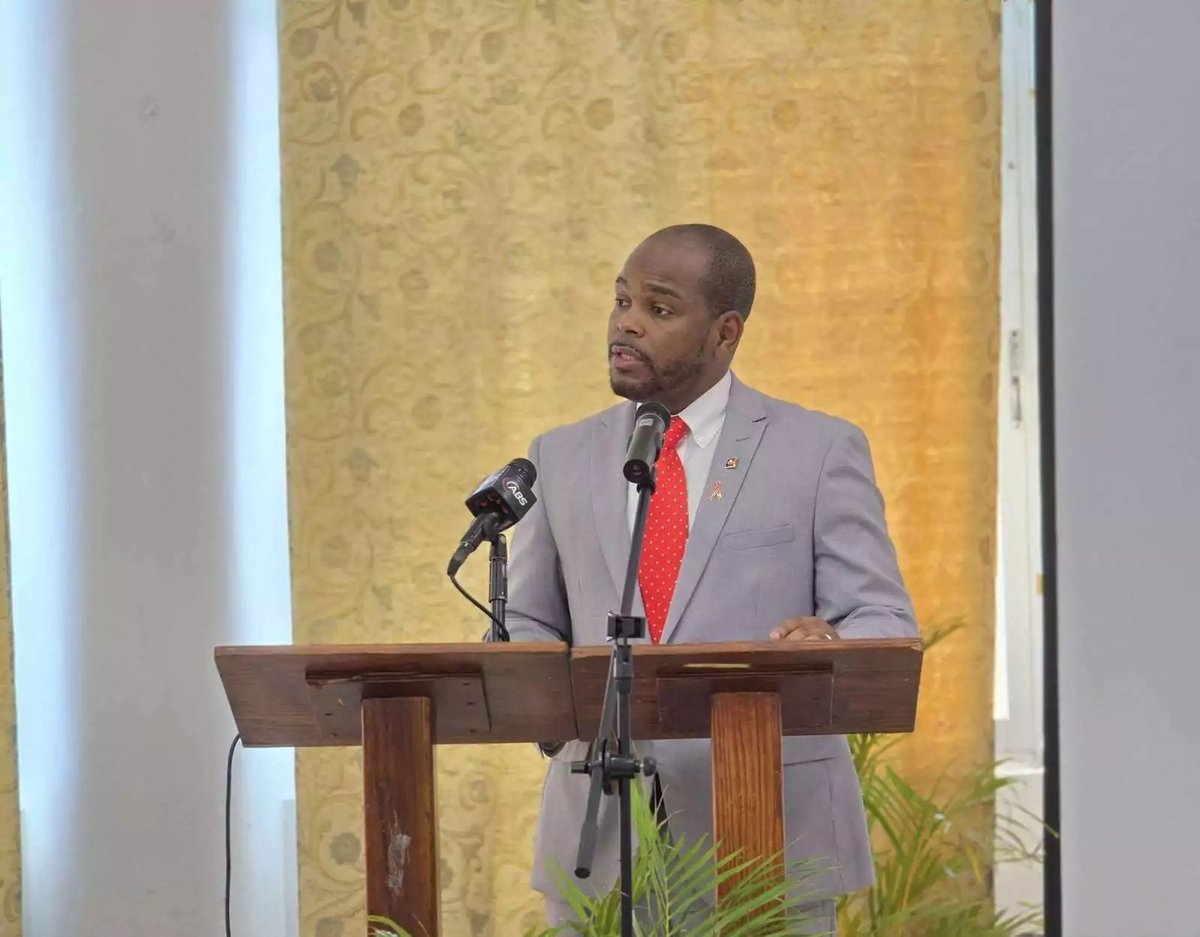
Before headlines announced that Joshuanette Francis had won her case in the Industrial Court of Antigua and Barbuda, more than five years of uncertainty, legal correspondence, medical assessments, negotiations, emotional exhaustion and financial hardship had already taken their toll. According to Antigua News Room, the court's ruling appeared to mark the end of a long battle — but Francis says it marked the beginning of another. Her story is not simply about an employment dispute. It is about disability, pregnancy, delayed justice, mental health and the hidden cost of enforcing your rights when you lack wealth or influence.
Francis was not a poor performer. During court proceedings, the company's own Human Resources representative acknowledged that she had been a good employee. She had progressed from part-time worker to full-time employee and eventually to the position of Junior Supervisor. Like many young Antiguans, she worked multiple jobs, made personal sacrifices and believed that hard work would deliver financial stability. She says there were occasions when she slept beneath the deck at her workplace because travelling home was not possible. Her goal was straightforward: build a better future for herself and her family.
That future shifted after she was diagnosed with osteoarthritis. Francis maintains that her disability never stopped her from working. Over the years she continued to teach, hike, volunteer, dance, travel and eventually establish Good Humans 268 Inc., an organisation dedicated to creating opportunities for people living with disabilities while advancing climate action. Yet she believes her diagnosis changed how she was perceived in the workplace. Her experience raises broader questions about how employers respond when disability enters an employee's life and whether workplaces genuinely understand the difference between having a disability and being unable to perform meaningful work.
The medical process itself also came under scrutiny during proceedings. Court documents and correspondence indicate that additional medical investigations were recommended. Francis argues that not every recommended examination was completed before decisions affecting her employment were made. She has also questioned why information about her medical care was reportedly communicated to her employer before it was communicated directly to her. For disability advocates, these questions extend beyond a single case. They speak to patient autonomy, informed decision-making and whether people living with disabilities remain at the centre of decisions affecting their own health and livelihoods.
The timing of the dispute deepened the hardship. Francis was pregnant when her employment situation changed. She describes years of emotional exhaustion, uncertainty and depression as she attempted to navigate pregnancy, motherhood, disability and an unresolved legal battle simultaneously. She believes those mental health consequences deserve greater public attention, particularly for women forced to manage multiple challenges at once while trying to protect their families.
The financial consequences extended well beyond the loss of employment. Before the dispute, Francis had been approved for a mortgage not once, but twice. After years of saving and working multiple jobs, she had secured the EC$12,000 deposit required by the bank. Losing her employment also meant losing the opportunity to purchase her first home. Although the Industrial Court later awarded compensation, Francis argues that no financial award can replace the investment opportunity she lost or the stability she had hoped to create for her son. "The court award cannot replace the house I never got," she has said.
In May 2026, the Industrial Court ruled in Francis' favour. The judgment described her dismissal as "harsh, oppressive and wholly contrary to good industrial relations practice" and concluded that she had been denied "basic dignity." Those findings represented a significant legal victory. However, as reported by Antigua News Room, Francis says they did not bring closure. Instead, they exposed another challenge within the justice system that much of the public knows little about.
Francis says many people assume that once a court delivers judgment, payment automatically follows. She says that is not how the process works. After the deadline set by the Court passed without payment, she was advised that she would need to return to the Industrial Court and file a fresh application asking the Court to address the employer's alleged failure to comply with its order. That application, she says, requires another filing fee estimated at approximately EC$1,500. Once filed, a new hearing must be scheduled — and depending on the Court's calendar, that hearing could take months or longer.
Even if the Court ultimately determines that an employer is in contempt, payment is still not guaranteed. Additional enforcement proceedings may become necessary, including applications before the High Court. Each new step requires additional legal costs, more time and further emotional energy. Francis argues that this represents one of the greatest weaknesses in the justice system. A worker who has already spent years proving their case may still be required to spend more money simply to enforce a judgment already made in their favour.
Her experience raises a pressing public policy question: who can afford justice? Large businesses often have access to legal teams and the financial resources to manage prolonged litigation. Ordinary workers frequently do not. Many have already lost their income. Some are supporting children. Others are paying medical bills while living with disabilities. Every additional filing fee, every legal consultation and every court appearance becomes another barrier between them and the justice they have already been awarded.
For people living with disabilities, those barriers are often greater still. The disability itself is frequently only part of the struggle. The greater burden comes from the systems surrounding it — the uncertainty of whether employers will recognise ability before diagnosis, whether healthcare decisions will be made with the patient rather than about them, and whether people will repeatedly be forced to prove that a disability does not diminish their value or capacity to contribute meaningfully to society.
Francis believes her case illustrates why disability rights cannot be confined to discussions about ramps, accessible bathrooms or reserved parking spaces. Disability rights also encompass equal access to employment, fair treatment, appropriate medical processes and meaningful access to justice. She notes that Antigua and Barbuda enacted disability legislation in 2017, yet key mechanisms envisioned under that legislation remained unavailable years later. She believes stronger institutional protections are necessary to ensure that people living with disabilities receive fair treatment before disputes escalate into lengthy legal battles.
Francis continues to release court judgments, correspondence, letters, medical records, timelines and other supporting documents. She says she is not asking the public to accept her account without scrutiny. Instead, she wants readers to examine the evidence for themselves — believing that transparency encourages accountability and creates space for meaningful public discussion about disability rights, workplace practices and access to justice in Antigua and Barbuda.