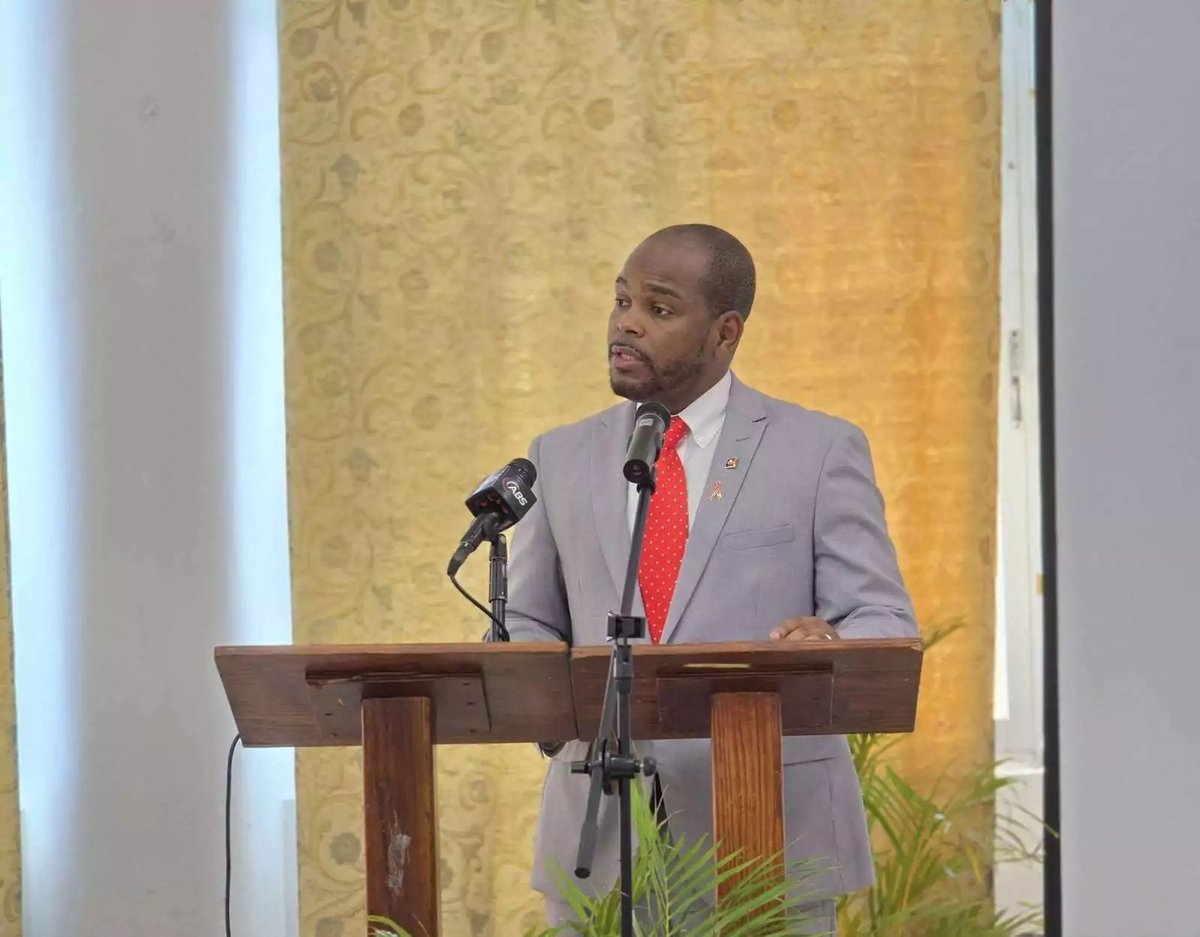
Opposition Leader Jamal Pringle is raising sharp questions about the government's handling of international pressure on Antigua and Barbuda's Citizenship by Investment Programme, arguing that years of mismanagement and poor transparency have left the country in a difficult position.
According to Antigua News Room, Pringle made the remarks on Observer Radio's Voice of the People on Tuesday, framing the government's response to European Union demands as symptomatic of deeper governance failures.
"I believe it's greed, it's mismanagement and it's a total disregard for the citizenry of Antigua and Barbuda," Pringle said.
The European Union has demanded that Antigua and Barbuda phase out its Citizenship by Investment Programme by June 2028, warning that failure to do so could cost the country visa-free access to the Schengen Area. Prime Minister Gaston Browne has rejected any move to dismantle the programme, insisting it remains vital to the national economy and will not be abandoned without viable alternatives in place.
Pringle, however, argued that the administration has conducted its negotiations with international partners without sufficient openness or accountability to Parliament and the public. He pointed to the government's handling of a third-country deportee agreement as a key example of that pattern.
"We would have asked some time ago for the Prime Minister to publish the MOU, lay before Parliament all the information on this matter so that we, as parliamentarians, can be aware of the situation," he said.
Pringle also recalled that the government had publicly denied reports that visa restrictions were being considered, only for such measures to be announced shortly thereafter.
"I don't know if you can recall him beating his chest on ABS… and shortly after we were slapped with the restrictions," he said.
The opposition leader argued that challenges of this magnitude demand cross-party consultation rather than unilateral government decision-making. He said the third-country deportee situation should have prompted an immediate dialogue between the government and opposition members.
"When this whole third-country deportee situation came up, the first thing that should have happened is for the government to call the members of the opposition and start the dialogue," Pringle said, adding that issues affecting the entire country require broad public consultation.
Pringle further criticised what he described as weak transparency mechanisms, noting that opposition legislators have repeatedly sought information through Parliament while the Information Commissioner's Office has yet to become fully operational.
The government has consistently defended its stewardship of the programme, maintaining that it remains one of the country's most important sources of development financing and that it continues to engage international partners on their concerns.