ST. JOHN'S, Antigua — Opposition Senators have voted against a Government resolution seeking parliamentary approval for the compulsory acquisition of private property adjacent to the former Deluxe Cinema site, arguing that lawmakers were not given sufficient information to responsibly authorise one of the State's most constitutionally significant powers.
According to Antigua News Room, the resolution sought authority to compulsorily acquire approximately 0.05 acres of land to facilitate the construction of a secure access and exit route serving the National Performing Arts Centre.
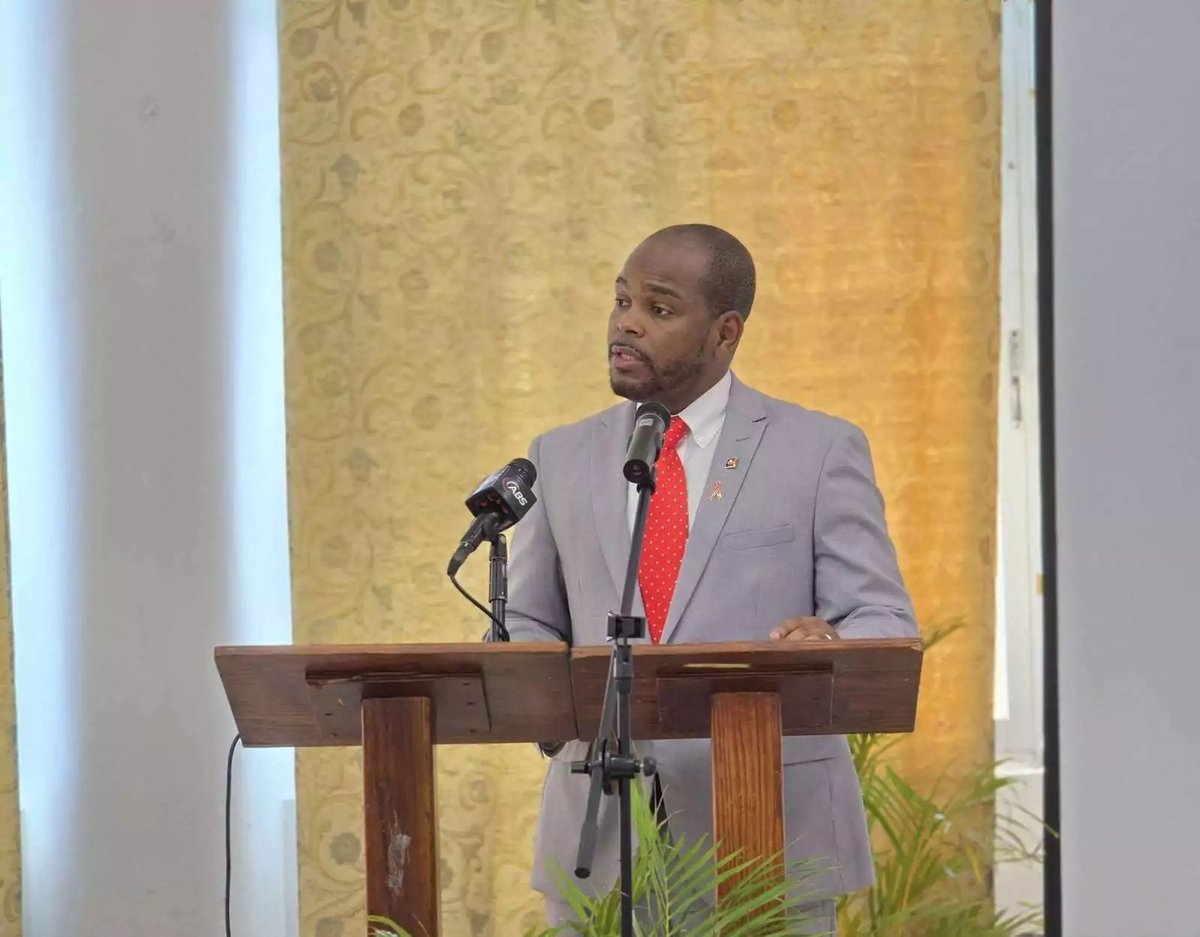
Speaking during the Senate debate, Opposition Senator Malaka Parker made clear that the Opposition does not oppose compulsory acquisition where it is genuinely necessary for a legitimate public purpose. However, she argued that Parliament cannot be asked to approve such a measure without adequate disclosure and justification.
"Compulsory acquisition is one of the most significant powers the State can exercise. It interferes with a citizen's constitutional right to property. Parliament cannot be expected to approve such a Resolution on trust alone. Government must provide the facts," Senator Parker said.
Senator Parker outlined a series of questions that remained unanswered before the vote, including why the Government pursued compulsory acquisition rather than voluntary purchase, whether negotiations were undertaken with the landowner and why they may have failed, whether alternative access routes were considered, and why the land was not identified during the original planning stages of the project. She also noted that Parliament was not informed of what compensation would be paid to the landowner, the total financial cost of the acquisition, or the impact on the remaining property.
"We are being asked to authorise the compulsory acquisition of private property without knowing what it will cost the people of Antigua and Barbuda. That is not good governance. Parliament has both a constitutional and fiduciary duty to ensure that public money is spent responsibly," she said.
Senator Parker further argued that the resolution raises broader concerns about Government planning practices.
"A national performing arts centre requires access roads, emergency access, fire routes and traffic management from the outset. If Government is only now acquiring land to provide essential access, the public is entitled to ask whether this reflects proper planning or whether taxpayers are once again paying for avoidable planning deficiencies," she said.
The Opposition also noted that Parliament was not provided with supporting documentation, including a traffic impact assessment, engineering studies, planning reports, an explanation of why the particular parcel was selected, details of the compensation methodology, or an estimated overall cost to the public purse.
Senator Parker emphasised that transparency strengthens, rather than delays, public projects. "Supporting national development does not mean abandoning parliamentary scrutiny. Public projects deserve public confidence, and public confidence is built through transparency, accountability and full disclosure," she said.
While reaffirming the Opposition's support for infrastructure development and acknowledging that compulsory acquisition may sometimes be necessary, Senator Parker maintained that such powers must be exercised only as a measure of last resort and only after Parliament has been given sufficient information to satisfy itself that the acquisition is necessary, proportionate and in the public interest.
"The issue before Parliament was never whether the Performing Arts Centre is important. The issue is whether Parliament was given enough information to responsibly authorise the compulsory acquisition of a citizen's property. In our view, it was not," she concluded.