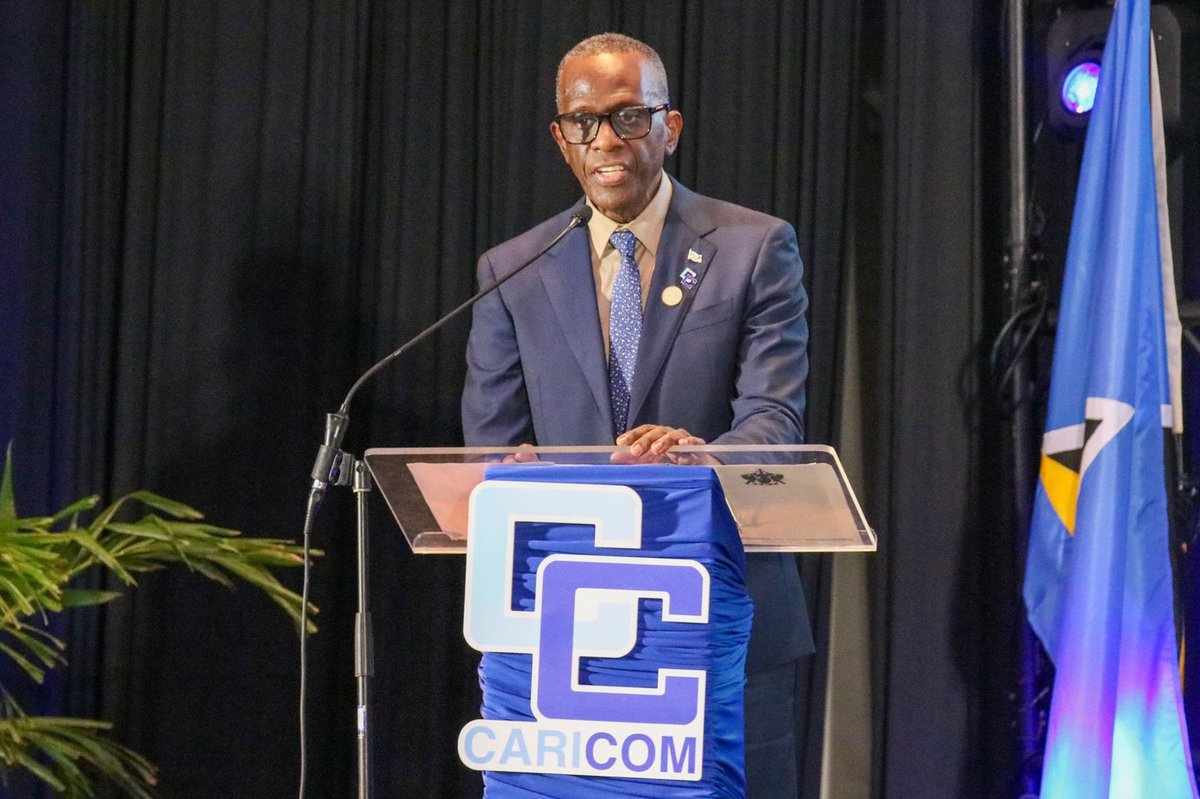
New Caribbean Community (CARICOM) Chairman Philip J. Pierre has framed his leadership around a single, pressing question he says citizens across the region are asking: "What more can CARICOM do for me?"
According to Antigua News Room, Pierre made the declaration Sunday evening, July 5, during his address at the Opening Ceremony of the Fifty-First Regular Meeting of the Conference of Heads of Government at Sandals Grande Saint Lucia. The Saint Lucian Prime Minister described the question not as an attack on the Community, but as a genuine appeal for solutions to the everyday pressures faced by ordinary people — rising food and energy costs, intensifying hurricanes, unpredictable rainfall, climate impacts on farming and fishing, and growing concerns about crime and violence.
Pierre insisted that regional integration must connect with the lived experiences of CARICOM citizens. It must move, he said, "from conference rooms to communities; from rhetoric to reality; from communiqués to results."
"It is not enough for our decisions to be recorded. They must be acted upon, measured, and followed through. My mantra is simple: Integration that our people cannot feel will not last," Pierre stated.
Outlining a people-focused, implementation-driven vision, the Chairman said his tenure "must belong not only to governments, but the people CARICOM is expected to serve." He called on the Community to measure every major decision against its impact on the daily lives of CARICOM citizens — not merely agreeing in principle, but delivering in practice.
Pierre identified regional unity as his foremost priority, describing it as "the foundation on which everything else rests." He argued that a divided Caribbean is easier for larger powers to engage and exploit, while a united Caribbean commands far greater collective influence on the world stage.
"When the Caribbean speaks with one voice, when we act together, when we negotiate as a bloc, our collective influence is far greater," he said. He pledged to ensure that no Member State feels "unheard, unseen, or isolated," adding that every citizen must see themselves reflected in CARICOM's work.
Among his stated priorities are advancing citizen security, advocating for climate justice, promoting economic renewal, improving food and nutrition security, and ensuring that youth, women, and vulnerable groups are included in the region's development agenda.
Pierre also stressed the need for deeper implementation of the CARICOM Single Market and Economy (CSME), including removing longstanding barriers to integration and expanding opportunities through improved transportation links, support for agriculture and fisheries, and preparation for emerging technologies, including artificial intelligence.
Engagement with young people will be a defining feature of his Chairmanship, Pierre said, noting that the future of the Community depends on their participation and confidence in regional integration. "They are asking whether CARICOM speaks to their future," he said, calling on the region to answer not with slogans, but with action.
The Chairman further called for stronger public support for CARICOM institutions, describing them as vital instruments of regional development and resilience in areas spanning public health, disaster response, education, security cooperation, and economic development.
Pierre assumed the Chairmanship of CARICOM on July 1.
The Caribbean Community was established on July 4, 1973, with the signing of the Treaty of Chaguaramas, revised in 2001 to provide for a single market and economy. CARICOM comprises fifteen Member States and six Associate Members, with a population of approximately sixteen million, sixty percent of whom are under the age of thirty. The CARICOM Secretariat is headquartered in Georgetown, Guyana.