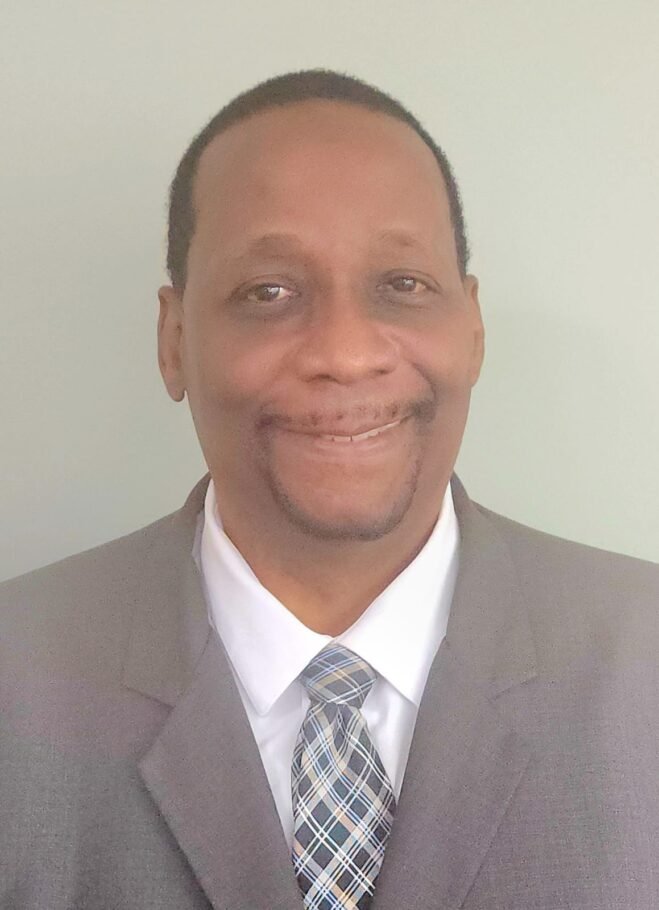
By Ambassador Dr. Clarence E. Pilgrim
Long before he understood the meaning of the word science, Ambassador Dr. Clarence E. Pilgrim was already practising it. Growing up on East Street in St. John's, Antigua, he was captivated by how things worked — particularly how plants grew. As reported by Antigua News Room, those early backyard experiments would shape a lifelong commitment to scientific inquiry and, today, inform a pointed challenge to one of the Caribbean's leading STEM organisations.
Two plants anchored his childhood curiosity: pumpkins and spinach. Convinced that feeding milk to a pumpkin plant would accelerate its growth, the young Pilgrim applied his theory with enthusiasm. The pumpkin flourished. He interpreted the result as confirmation of his hypothesis. Years later, he acknowledges that healthy plant growth depends on nutrients, soil quality, moisture, sunlight, and biological processes — but credits that early experiment with instilling a principle that has guided him ever since: progress begins with observation, experimentation, and a willingness to learn from results.
His spinach patch, enriched with generous amounts of manure, grew lush and abundant. He inspected it daily. Without recognising it at the time, he was practising the core fundamentals of scientific inquiry — observing, testing, evaluating, and refining.
"Science does not begin in a laboratory," Dr. Pilgrim writes. "It begins with a question."
That spirit of inquiry, he argues, is precisely what the Caribbean Science Foundation (CSF) has worked to nurture since its establishment in 2010. Under the guidance of Professor Cardinal Warde of MIT and other regional STEM leaders, the Foundation has advanced science, technology, engineering, and mathematics education, research, innovation, and entrepreneurship across the Caribbean. Key initiatives include the Student Program for Innovation in Science and Engineering (SPISE), teacher development, mentorship programmes, and research partnerships aimed at cultivating a new generation of Caribbean innovators.
At the heart of the Foundation's philosophy lies a conviction Dr. Pilgrim strongly endorses: the Caribbean's greatest resource is neither its land nor its sea, but the limitless potential of its people. History, he contends, bears this out — from Nobel Laureate Sir Arthur Lewis to today's emerging researchers, engineers, physicians, and entrepreneurs, regional talent consistently flourishes when it is identified, nurtured, and encouraged.
Decades after those childhood experiments on East Street, Dr. Pilgrim's appetite for discovery remains undiminished. That personal experience underpins his central argument: scientific inquiry should not be treated as a phase of life confined to youth, but as a lifelong pursuit. "Experience is not the enemy of innovation," he writes. "It is often one of its greatest allies."
He points to an underutilised reservoir of knowledge across the region. Retired teachers, farmers, engineers, healthcare professionals, public servants, entrepreneurs, and community leaders carry decades of practical wisdom that could meaningfully enrich scientific inquiry and innovation. Yet this resource, Dr. Pilgrim argues, remains largely untapped.
Invoking the legacy of George Washington Carver — whose life demonstrated that learning and discovery carry no expiration date — Dr. Pilgrim issues a direct challenge to the Caribbean Science Foundation. He calls on the organisation to pioneer a regional "Mature Citizens for Science" initiative, engaging retirees and senior professionals in mentoring, citizen-science projects, innovation forums, research discussions, and lifelong learning programmes. He further proposes an annual symposium bringing together experienced professionals, researchers, educators, entrepreneurs, and students to strengthen cross-generational collaboration.
The urgency of the moment lends weight to his appeal. Whether addressing food security, healthcare, renewable energy, environmental protection, artificial intelligence, or technology entrepreneurship, science will play a defining role in shaping the Caribbean's economic future. Investing in scientific inquiry, Dr. Pilgrim writes, is not simply an educational priority — it is an economic and developmental imperative.
The Foundation is already demonstrating what becomes possible when vision meets action. From 25 to 27 June 2026, it hosted the inaugural Caribbean SEED Summit in Barbados, convening innovators, investors, entrepreneurs, and regional partners to strengthen the region's innovation ecosystem. A centrepiece of the summit was the Caribbean STEM Startup Challenge, in which sixteen technology ventures pitched their innovations to investors, opening pathways to funding, incubation, and commercial growth. The Foundation is also advancing a regional Small Business Innovation Research and Development (SBIRD) framework to help governments support emerging technology enterprises through strategic investment and partnerships.
These initiatives signal that the Foundation is not only inspiring scientific excellence but actively creating practical pathways toward innovation, economic diversification, and sustainable development.
As Dr. Pilgrim reflects on his East Street garden, his message to the region is clear: every scientific journey begins with a simple question. The Caribbean Science Foundation has proven its capacity to nurture that spirit among young people. The next step, he urges, is to embrace a broader, more inclusive vision — one that recognises scientific discovery as the inheritance of every Caribbean citizen, regardless of age or background.
"The future of the Caribbean may not begin in a laboratory," he concludes. "It may begin, as it once did for me on East Street, with a child nurturing a pumpkin plant, asking a simple question, and daring to discover the answer."
The views expressed are those of the writer.