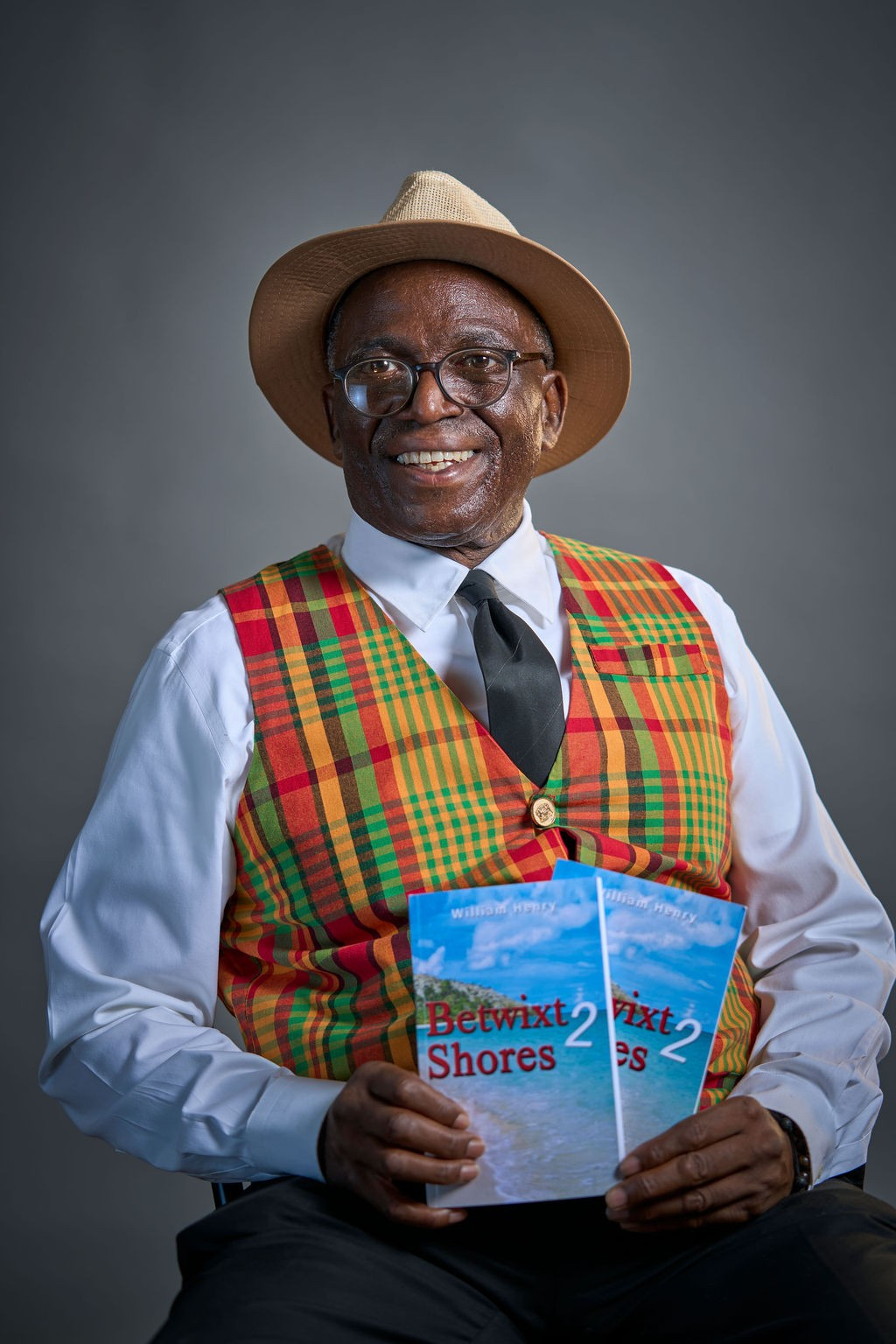
Two photographs of Antiguan author William Henry carry a story far greater than portraiture. According to Antigua News Room, the images serve as a visual introduction to Henry's memoir, Betwixt 2 Shores, which chronicles his experience leaving Antigua as an unaccompanied ten-year-old in February 1970 to begin a new life in London.
At the centre of one image sits a well-worn vintage grip — in Antigua, more than a small suitcase. For generations of Antiguans, the grip was a trusted travel companion, and here it becomes a powerful symbol of separation, displacement, resilience, and hope. It represents a child who crossed the Atlantic alone, his story echoing the experience of a generation of Caribbean children whose lives were irrevocably shaped by migration and the pursuit of a better future.
Equally striking is the vibrant national dress Henry wears in the photographs. Crafted from traditional Madras fabric, it reflects the rich cultural heritage of Antigua and Barbuda. The fabric itself traces a remarkable journey — originating in Madras, now known as Chennai, India, it arrived in the Caribbean through colonial trade and became woven into the lives of African descendants throughout the region. Over time, it evolved into an enduring symbol of Antiguan and Barbudan identity.
Today, the national dress represents far more than colourful attire. It stands as a reminder that Antigua and Barbuda is defined not only by its natural beauty but by a history of resilience, perseverance, and cultural pride — a tribute to generations whose determination transformed hardship into hope.
As an established Antiguan writer, Henry has dedicated much of his work to preserving that heritage. His writing explores themes of identity, migration, family, belonging, and memory, ensuring that stories rooted in Antiguan history continue to reach future generations.
In Betwixt 2 Shores, the symbolism of the national dress and the grip converge with quiet power. The dress represents the heritage that endured. The grip represents the life-changing journey that separated a young boy from his homeland. Together, they tell a story shared by many Antiguan and Caribbean families whose lives were shaped by migration, sacrifice, and hope.
The photographs, as reported by Antigua News Room, are ultimately visual narratives — celebrating the resilience of the Antiguan people, the importance of cultural identity, and the enduring bond between homeland and diaspora.
At the heart of Henry's memoir is a universal message: although life may carry people between two shores, they remain forever anchored by their history, their culture, and the stories that define them.
Betwixt 2 Shores is available on Amazon.