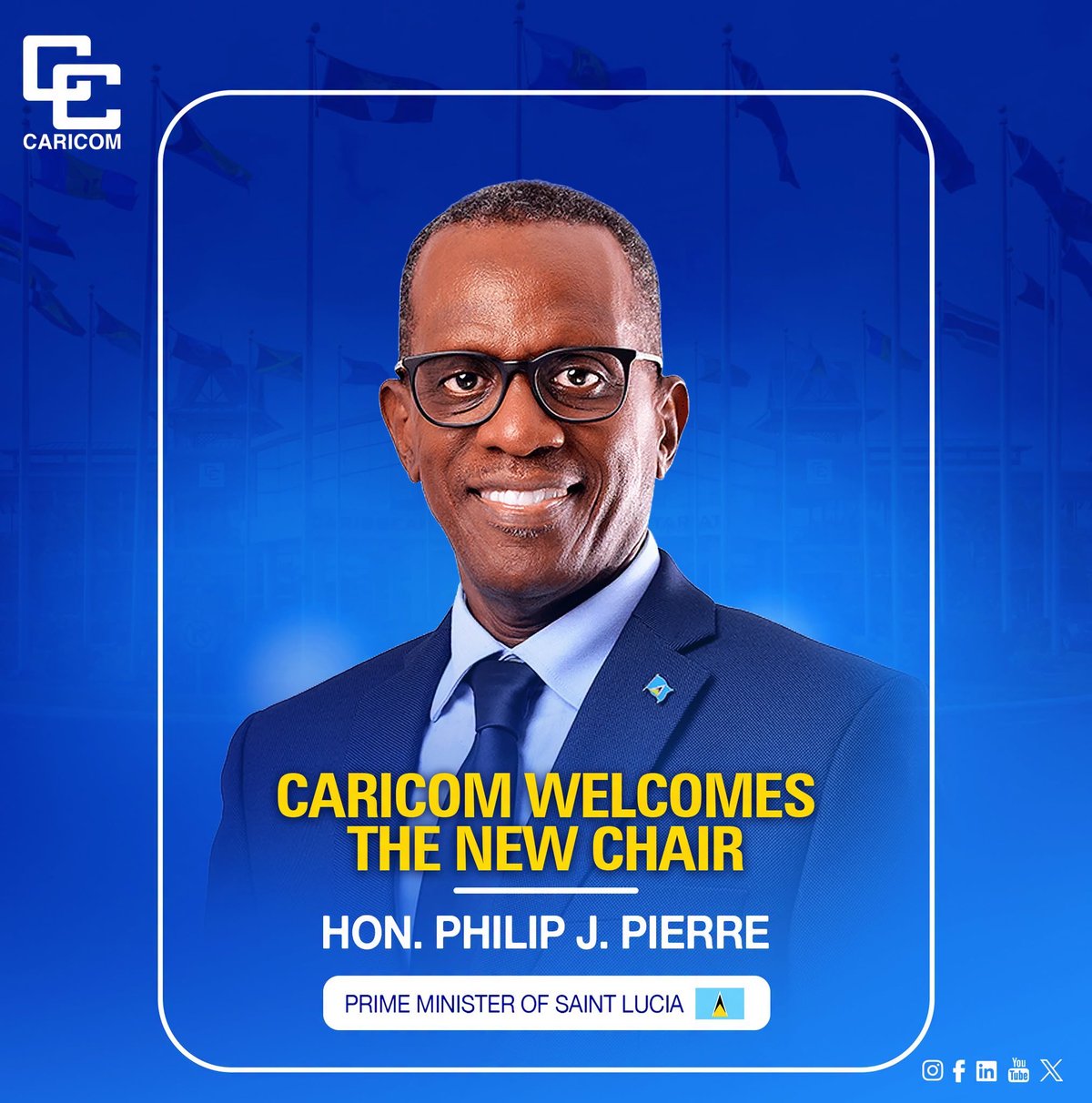
TURKEYEN, Greater Georgetown, Guyana — Saint Lucia's Prime Minister, the Hon. Philip J. Pierre, is set to assume the chairmanship of the Caribbean Community (CARICOM) on 1 July 2026, serving in the role until 31 December 2026. According to Antigua News Room, Pierre has pledged to make the regional body more visible and meaningful in the everyday lives of Caribbean citizens.
In his incoming statement, issued from the CARICOM Secretariat on Tuesday, 30 June 2026, Pierre accepted the responsibility with what he described as "humility, determination, and a deep sense of service to the people of our Region."
"CARICOM has always been built on a simple but powerful belief: that our countries can achieve more together than we ever could alone," Pierre said. "That belief remains as important today as it was at the founding of our Community."
Pierre acknowledged that citizens across the region are asking a fundamental question — how can CARICOM make a greater difference in their everyday lives — and stated that this question must guide the work of his chairmanship.
"During my tenure as Chairman, my commitment is clear: CARICOM must continue to move closer to the people," he said. "It must be seen and felt not only in meetings and declarations but also in communities, schools, businesses, homes, and in the opportunities available to every Caribbean citizen."
Among his stated priorities, Pierre highlighted the need to strengthen regional unity, advance climate action, improve food and nutrition security, support economic growth, embrace digital transformation, and expand opportunities for trade, investment, and the movement of people, skills, services, and ideas across the Community.
He was equally emphatic on the issue of security, stating that development and security are inseparable. "Every citizen deserves the opportunity to live, work, learn, and thrive in peace and dignity," Pierre said.
At the core of his address was a direct challenge to the relevance of regional integration. "The success of CARICOM must ultimately be measured by whether our people feel the benefits of integration in their daily lives," he said. "Because integration that our people cannot feel will not last."
Pierre closed his statement with a call for collective action, urging the region to move "from resilience to renewal and revival."
The Caribbean Community was established on 4 July 1973 with the signing of the Treaty of Chaguaramas, which was revised in 2001 to provide for a single market and economy. CARICOM comprises fifteen Member States and six Associate Members, with a combined population of approximately sixteen million citizens, 60 percent of whom are under the age of 30. The organisation's work rests on four pillars: economic integration, foreign policy coordination, human and social development, and security cooperation. Its Secretariat, the principal administrative organ of the Community, is headquartered in Georgetown, Guyana.