Prime Minister Gaston Browne has stated that Antigua and Barbuda already has a sizeable LGBTQ community and should not be expected to accept additional LGBTQ refugees or asylum seekers under any potential agreement with the United States involving third-country nationals.
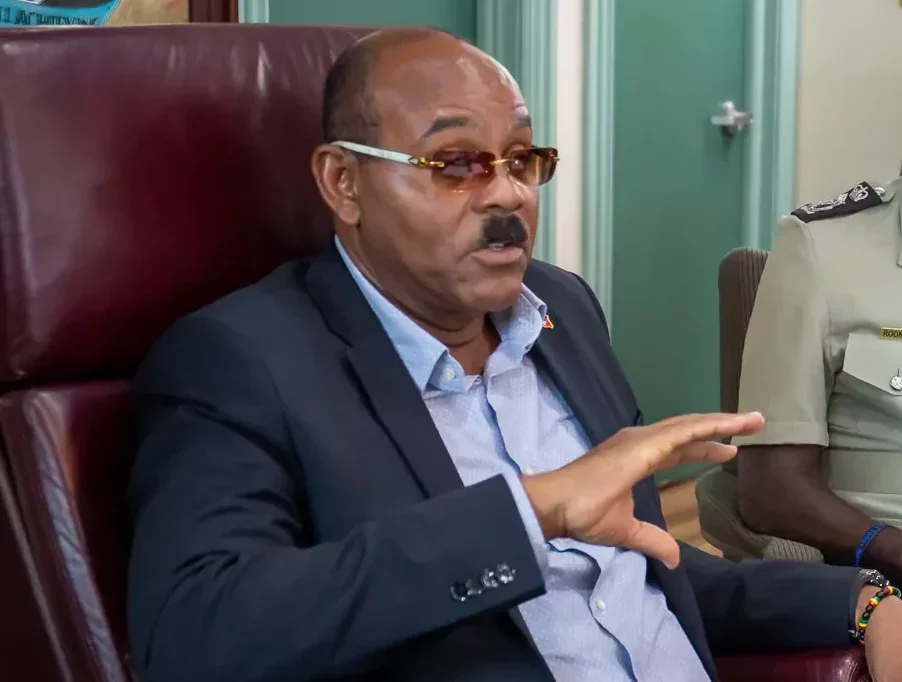
According to Antigua.news, Browne made the remarks during the Browne and Browne Show on Saturday, while discussing ongoing negotiations between his government and Washington over the United States' request that Caribbean nations accept a limited number of third-country nationals who cannot easily be returned to their countries of origin.
Browne cited the example of St. Kitts and Nevis, claiming that two of the three third-country nationals reportedly accepted by that country under a recent arrangement with the United States identify as LGBTQ. He used the example to argue that Antigua should not be required to receive similar individuals.
"I'm told the three that were sent to St. Kitts, two of them are LGBTQIAs," Browne said. "We have enough of those here."
The Prime Minister was careful to stress, however, that his government's objections are not limited to questions of sexual orientation or gender identity. He said Antigua's primary concern is ensuring that any individual accepted into the country undergoes thorough vetting.
"We do not want people who are criminals. We don't want people who are sick. We do not want anyone who is going to become a charge," Browne said.
He argued that Antigua's limited resources make it difficult to absorb individuals who may require long-term government support once any temporary assistance provided by the United States comes to an end.
Browne said Antigua has indicated a willingness to consider accepting up to ten individuals per year, provided they are fully vetted, carry no serious criminal history, and present no security or public health concerns. He added that his government has also requested that all individuals arrive with valid travel documents, rather than temporary documents issued by U.S. authorities.
The Prime Minister maintained that Antigua and Barbuda holds a sovereign responsibility to determine who enters and resides within its borders, and said his administration would continue negotiating terms that protect the country's national interests.
The discussions form part of a broader effort by Washington to secure agreements with regional governments to receive third-country nationals as part of its immigration enforcement strategy — a issue that has prompted wider public debate across the Caribbean.