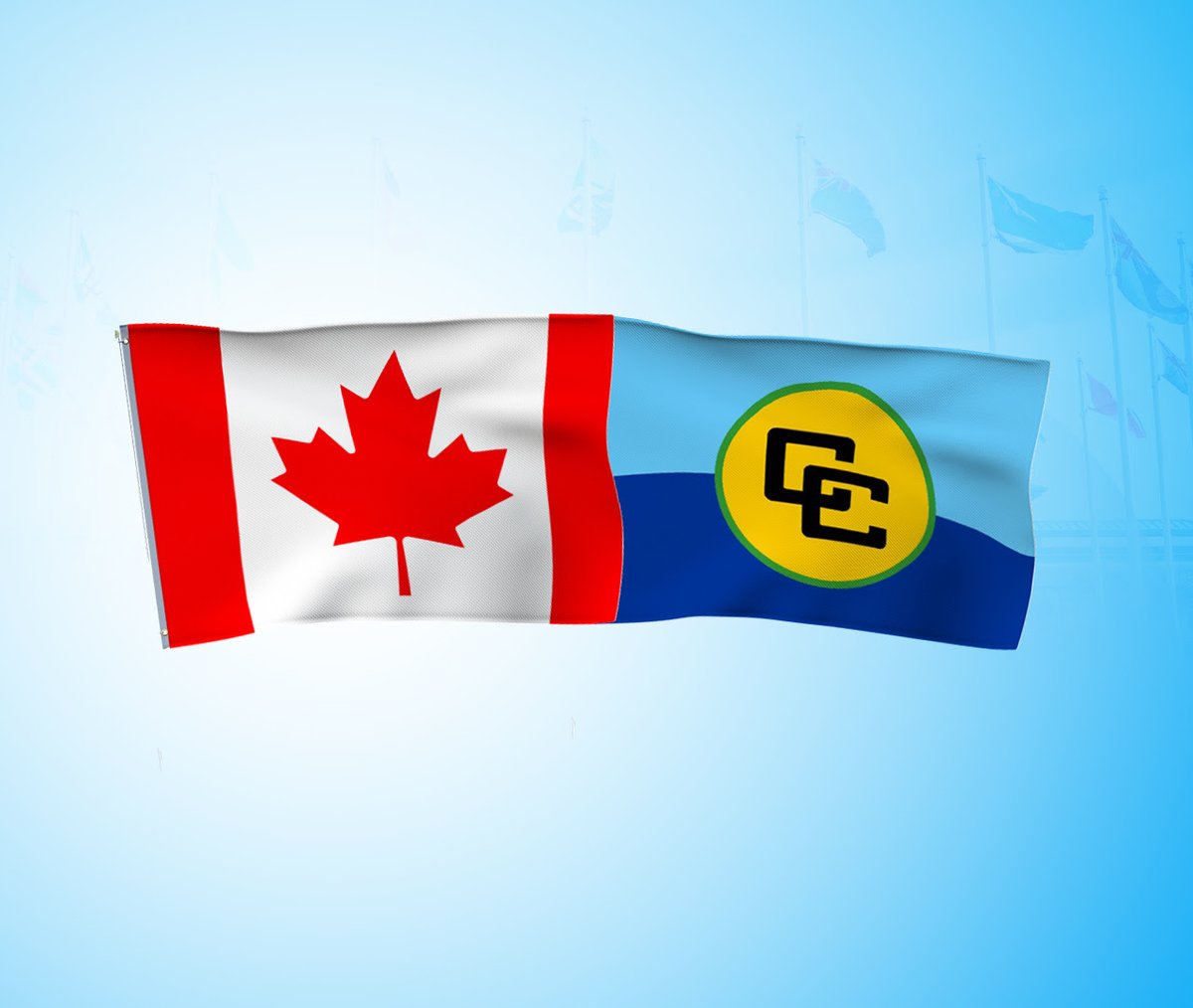
Canada and the Caribbean Community (CARICOM) have renewed their strategic partnership, reaffirming shared commitments to regional security, economic growth, climate resilience, and democratic values at the 2026 Canada-CARICOM Foreign Ministers' Group Meeting held in Panama City, Panama.
The meeting, held on the margins of the 2026 Organization of American States (OAS) General Assembly, was co-chaired by Canada's Minister of Foreign Affairs, the Honourable Anita Anand, and Barbados' Senior Minister of Foreign Affairs and Foreign Trade, the Honourable Christopher Sinckler, representing the Chair of CARICOM's Council for Foreign and Community Relations (COFCOR).
Building on the 2023 Canada-CARICOM Strategic Partnership, ministers endorsed a new, results-focused Action Plan structured around three priority pillars: competitive and resilient economies, climate action, and regional security and stability. They stressed the importance of clear timelines, measurable outcomes, and sustainable financing mechanisms to drive effective implementation.
On regional security, ministers discussed the evolving threat landscape, including transnational organised crime, gang activity, and irregular migration. They called for strengthened cooperation to build institutional capacity, enhance maritime security, and disrupt illicit networks. Ministers acknowledged that regional security challenges are increasingly interconnected, requiring comprehensive responses spanning cyber resilience, intelligence sharing, and the dismantling of criminal networks. Canada's ongoing support through capacity-building and operational partnerships was commended.
Haiti featured prominently in discussions. Ministers expressed concern over the country's deepening political, security, and humanitarian crisis and its broader regional consequences, including increased drug and arms trafficking. They underscored the importance of sustained international support for the Gang Suppression Force (GSF) and pledged full support for the timely renewal of its United Nations Security Council mandate in early fall.
Ministers took note of GSF deployments to date, including at the command level, and the training and capacity-building support the force is providing on the ground. They reaffirmed the right of Haitians to choose their own government and backed CARICOM's support for Haiti's interim authorities to hold credible elections at the earliest opportunity. Addressing corruption and impunity — including through the timely operationalisation of Haiti's two new specialised judicial units — was identified as critical to rebuilding public trust. Ministers agreed to convene a broader consultation on Haiti on the margins of the upcoming United Nations General Assembly.
On economic growth and climate resilience, ministers highlighted the strong link between access to affordable energy and economic development, noting that reliable and reasonably priced energy can drive industrial growth and innovation. They identified opportunities to expand trade and investment, strengthen supply chains, and support sustainable development — including through the Commonwealth Caribbean Countries Tariff programme, CARIBCAN, which provides duty-free access to the Canadian market for most products from 18 Commonwealth Caribbean countries and territories.
Ministers also stressed the need to reform international financial architecture and improve access to concessional financing for vulnerable middle-income Small Island Developing States. Strengthening correspondent banking relationships, disaster preparedness, and accelerating the transition to clean and renewable energy were highlighted as key priorities. The discussions underscored the importance of financing options that account for national vulnerabilities and capacity to absorb external shocks.
Looking ahead, ministers tasked officials with finalising the details of the renewed Action Plan, identifying priority initiatives, and building a workplan for implementation. A Senior Officials' Dialogue is scheduled for this fall to advance implementation and report back to ministers.
The meeting brought together foreign ministers and senior representatives from Barbados, The Bahamas, Jamaica, Guyana, Saint Lucia, Saint Vincent and the Grenadines, Belize, Dominica, Grenada, Haiti, Saint Kitts and Nevis, Suriname, and Trinidad and Tobago, alongside the CARICOM Secretariat.
CARICOM was established on 4 July 1973 with the signing of the Treaty of Chaguaramas, revised in 2001 to allow for a single market and economy. The community comprises fifteen member states and six associate members, with a population of approximately sixteen million, 60 percent of whom are under the age of 30.