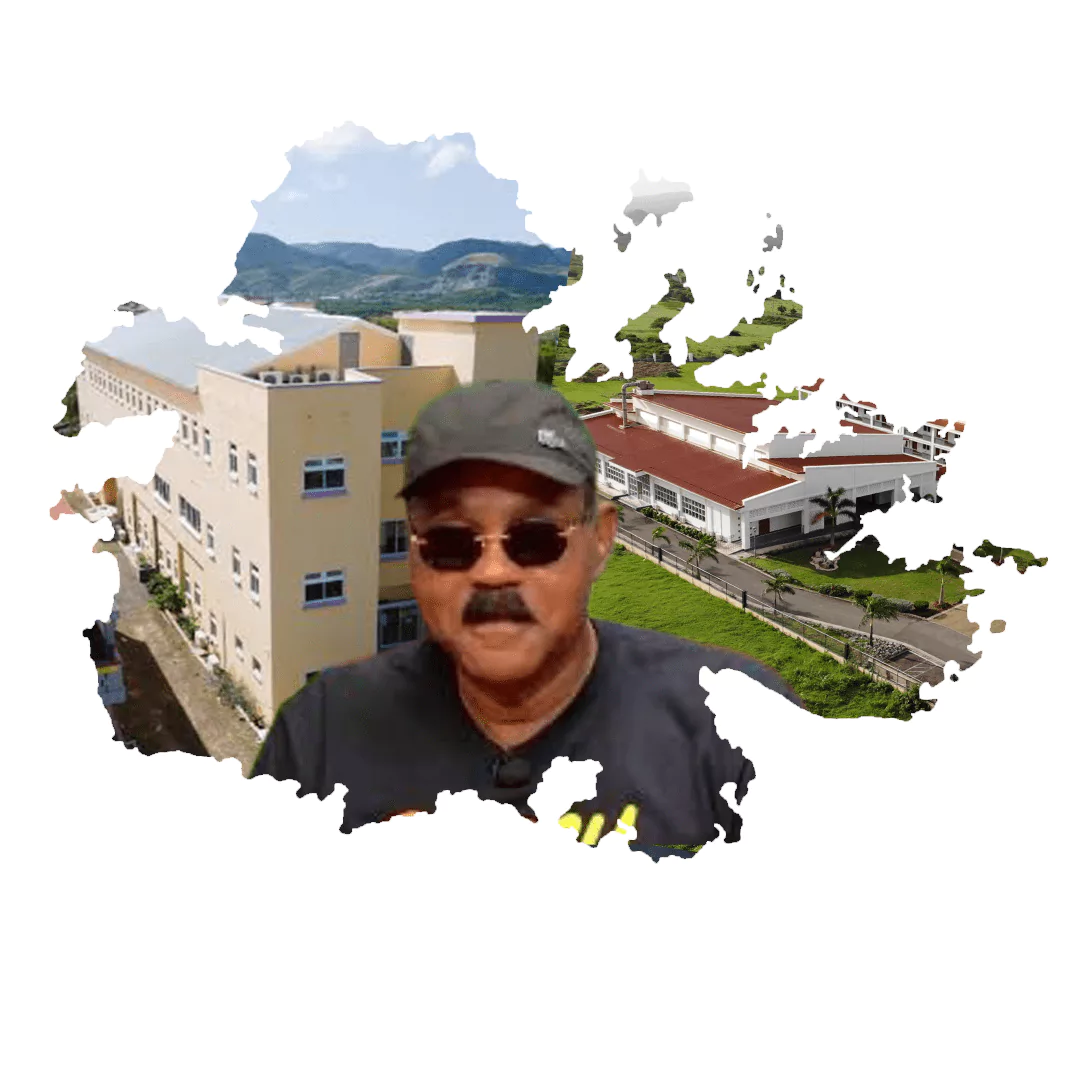
Professor C. Justin Robinson, Pro Vice-Chancellor and Principal of The UWI Five Islands Campus, has issued a public call for Prime Minister Gaston Browne's proposed education windfall tax to be expanded in scope, made more transparent, and structured to benefit every level of Antigua and Barbuda's education system — not tertiary institutions alone. According to Antigua.news, the Prime Minister floated the idea of extending and broadening the windfall tax last Saturday, dedicating new revenue entirely to education.
Professor Robinson acknowledged his own position candidly. As head of an institution that already benefits from the existing tax, he said the easy argument would be to direct every new dollar to his campus. He made the opposite case.
"If we are serious about education as nation-building, we must fund the whole pipeline, not just the peak," Robinson wrote.
He framed education as the only investment that returns to society in every direction at once — producing nurses, teachers, technicians, and entrepreneurs from a single generation of learners. On that basis, he argued, education cannot remain the business of government ministries alone. Households, employers, and communities all hold a stake in its outcomes.
Public discussion to date has focused heavily on tertiary education. The UWI Five Islands Campus has grown from fewer than 200 students in 2019 to nearly 1,500 today. Robinson acknowledged that growth but warned that a university is the peak of a pyramid, and a peak can only rise as high as its base allows.
He identified gaps at every level of the current system. A child who cannot read fluently in primary school, he argued, will not be rescued by a tertiary levy at nineteen. Secondary schools struggling to retain and challenge students simply pass their deficits upward. The Antigua and Barbuda College of Advanced Studies, which he described as a critical national bridge covering technical, vocational, hospitality, and continuing education, remains insufficiently equipped.
"Fund the peak alone, and we keep manufacturing the gaps we later spend a fortune trying to close," Robinson wrote.
His proposed framework would divide any dedicated education fund into structured shares: one for early childhood development and primary literacy; another for secondary quality, student retention, and teacher development; a third to strengthen the Antigua and Barbuda College of Advanced Studies; and a continuing share for The UWI Five Islands Campus.
Robinson attached two firm conditions to any such arrangement. The first is a public education dashboard — not a glossy annual report, he said, but a plain-language, regularly updated accounting of what was raised, where funds were directed, and what measurably changed. Indicators would include reading levels, attendance, CSEC and other exam results, technical and vocational completions, and university enrolment, retention, and graduation rates. He called for the numbers to be public and, where necessary, uncomfortable.
The second condition is reciprocity. Robinson proposed that documented community service hours become a standard part of the education journey at every level, from secondary school through the college and university. Students could tutor younger children, restore community spaces, assist in libraries, clinics, sports programmes, or youth organisations. In his view, this transforms the student from a recipient of public investment into an active contributor to public life.
"That is the deeper promise of this proposal," Robinson wrote. "Not simply more money but a national bargain. Those who can contribute more will do so; those who benefit will give back; and the institutions that receive will show, clearly and publicly, what difference it made."
Robinson closed by invoking the economist Lloyd Best, who argued that a people must build and own the institutions that shape them. He was direct in his conclusion: no foreign donor or external hand would educate the Antiguan and Barbudan child in the place of a society unwilling to do so itself.
"The Prime Minister has opened an important door," Robinson wrote. "Let us walk through it with ambition and discipline."