A pointed commentary published by Antigua News Room argues that the word "xenophobia" has been deliberately weaponised in Antigua and Barbuda to silence legitimate debate over immigration policy and its alleged manipulation for political gain.
According to Antigua News Room, the commentary traces the etymological roots of the word xenophobia — derived from the Greek xenos, meaning stranger or foreigner, and phobos, meaning fear or terror — arguing that its original meaning carried no inherently negative connotation. The writer contends that the word has since expanded to include hatred and hostility toward foreigners, and that this evolved definition is now being selectively deployed to shame citizens who raise valid concerns.
"There is nothing intrinsically wrong with fearing a stranger," the commentary states, drawing on the analogy of a woman alone at home who spots an unknown figure outside her window in the early hours of the morning. The writer uses this example to argue that protective caution toward outsiders is a natural human instinct.
The commentary goes further, asserting that Antiguans and Barbudans have historically been among the most welcoming people in the Caribbean toward regional neighbours. It challenges what it describes as politically motivated accusations of xenophobia, calling such characterisations "completely disingenuous."
At the heart of the piece is a serious allegation: that the government is manipulating immigrant communities through temporary handouts and false promises in order to consolidate political power. The writer draws a stark comparison, describing this practice as a form of state-sponsored human trafficking — an exploitation, the commentary argues, of Caribbean nationals who genuinely seek better lives.
"Taking advantage of our Caribbean brothers' and sisters' genuine desire for a better life with deceit and temporary handouts is downright wrong," the piece states. The commentary also extends this characterisation to what it describes as a scheme involving third-country deportees.
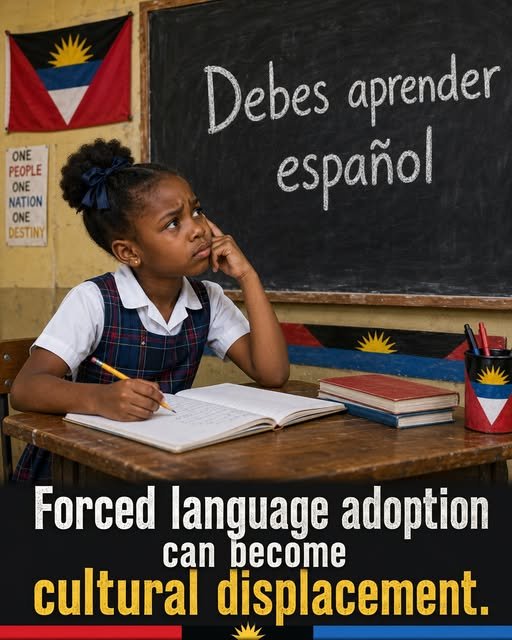
The writer raises several additional concerns, including what is described as the threatened dilution of Antiguan and Barbudan citizenship through the sale of passports, perceived pressure on national symbols, and opposition to establishing Spanish as an official language — all positions the commentary says are now labelled xenophobic by political operatives.
"Even caring for the Antiguan and Barbudan historical and cultural way of life is xenophobic," the commentary states pointedly.
The piece closes with a warning: that the very manipulation it describes risks creating the conditions for genuine xenophobia to take root — an outcome, the writer says, that all sides would ultimately condemn. It calls on Antiguans and Barbudans to reject what it terms the government's "treasonous manipulation of immigrants through the diminution of our national identity."