Antigua and Barbuda has joined fellow Small Island Developing States (SIDS) in calling for stronger global climate action and equitable access to climate financing ahead of the upcoming United Nations Climate Change negotiations in Bonn, Germany.
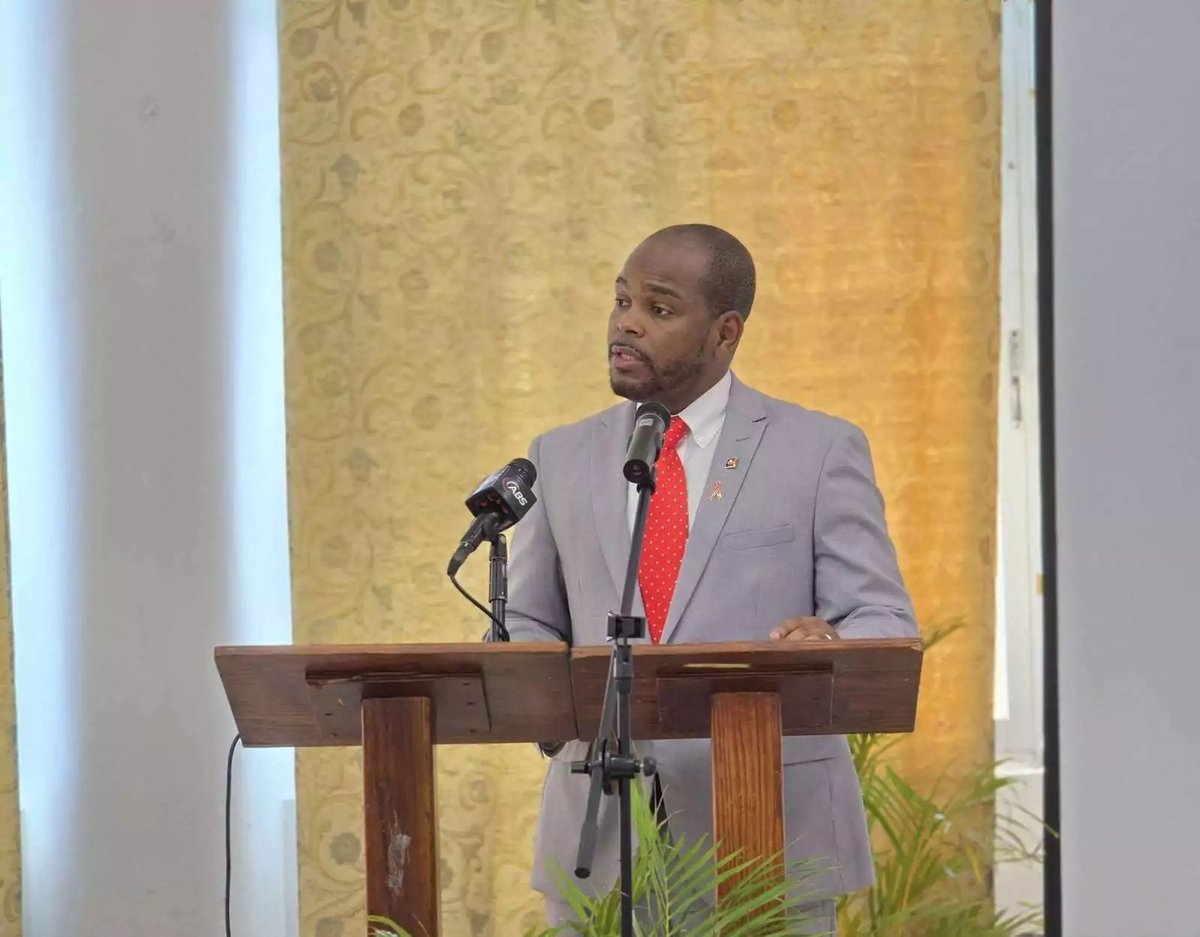
According to Antigua.news, Minister of Health, Wellness, Environment and Civil Service Affairs Honourable Michael Joseph delivered a forceful appeal at the Alliance of Small Island States (AOSIS) forum titled "New Tools to Save 1.5°C," urging major emitting nations to accelerate emissions reductions and dismantle the financial barriers that continue to hamper vulnerable island nations.
Minister Joseph warned that climate change poses a direct threat to the economic stability and long-term development of small island states — nations that contribute the least to global greenhouse gas emissions yet bear a disproportionate share of the consequences.
"We contribute the least to emissions, but our exposure is among the highest," Minister Joseph said. "One hurricane can erase decades of development overnight. Our people deserve the same opportunity for sustainable growth and resilience as every other nation."
The Minister highlighted the particular challenges facing countries like Antigua and Barbuda, which, despite being classified as "high income," remain acutely vulnerable to natural disasters and frequently struggle to access concessional financing and development assistance. He called for urgent reform of the international financial system, arguing that the current framework fails to reflect the real circumstances confronting climate-vulnerable island nations.
Antigua and Barbuda has made notable progress in building its climate financing capacity and is now eligible to access up to US$250 million through the Green Climate Fund. However, Minister Joseph cautioned that limited institutional and technical capacity continues to slow the implementation of critical resilience projects.
"Accessing financing is only one part of the challenge," he said. "For SIDS, implementation capacity remains a major obstacle. We need long-term investment in people, institutions, and systems that allow small states to effectively deliver climate solutions."
AOSIS Chair Ambassador Ilana Seid reinforced the urgency of closing the gap between climate commitments and concrete action. "At Bonn, AOSIS will continue fighting to ensure the special circumstances of SIDS are fully recognised," Ambassador Seid said. "Climate finance, technology transfer, and capacity-building support must move from discussion to delivery."
The upcoming Bonn Climate Change Conference is expected to play a pivotal role in shaping negotiations ahead of the next United Nations Climate Change Conference (COP). Small island states are pushing for greater accountability and stronger international commitments to limit global warming to 1.5 degrees Celsius.