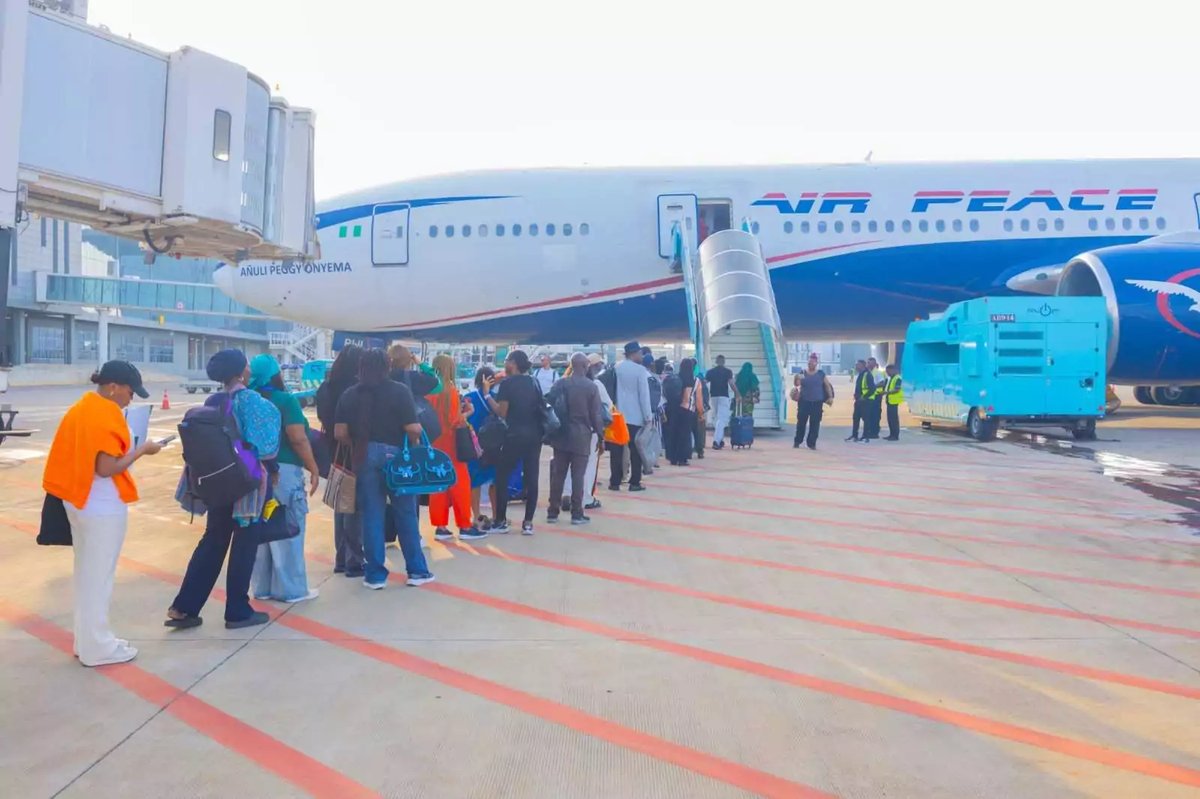
Regional concern is growing over the handling of passengers connected to Air Peace's new Nigeria-to-Caribbean air service, after St Kitts and Nevis reportedly refused entry or landing clearance for some passengers travelling onward from Barbados. According to Antigua.news, the developments are unfolding just days after the inaugural Air Peace flight from Lagos landed in Barbados as part of a new air bridge linking West Africa to the Caribbean.
Antigua and Barbuda had already moved to divert the flight before it could land at V.C. Bird International Airport, where it had been expected on Monday. Prime Minister Gaston Browne indicated that the government was taking a cautious approach, noting that passengers destined for Antigua would transit through Barbados and then travel onward via LIAT.
Regional scrutiny intensified further after St Kitts and Nevis declined to facilitate landing arrangements for certain passengers, amid heightened international health alerts connected to Ebola outbreaks in parts of Africa.
Concerns escalated following reports from Nigerian media stating that the Nigeria Centre for Disease Control and Prevention (NCDC) had placed Nigeria on a "high risk of Ebola importation" designation, citing ongoing outbreaks in the Democratic Republic of Congo and Uganda. The NCDC warned that international travel and uncertainty over the full scale of the outbreak had raised the risk profile for the region.
As reported by Antigua.news, three Red Cross volunteers in the Democratic Republic of Congo reportedly died from suspected Ebola infections after allegedly being exposed while handling dead bodies. The Human Rights Writers Association of Nigeria (HURIWA) also reportedly sounded the alarm over what it described as a renewed and expanding Ebola threat across parts of Africa.
The NCDC's assessment reportedly identified border communities, major transport hubs, and areas with high volumes of international movement as particularly vulnerable to possible importation risks.
The developments are likely to heighten anxieties across the Caribbean as regional governments continue to navigate the competing priorities of tourism expansion, regional connectivity, and public health security.