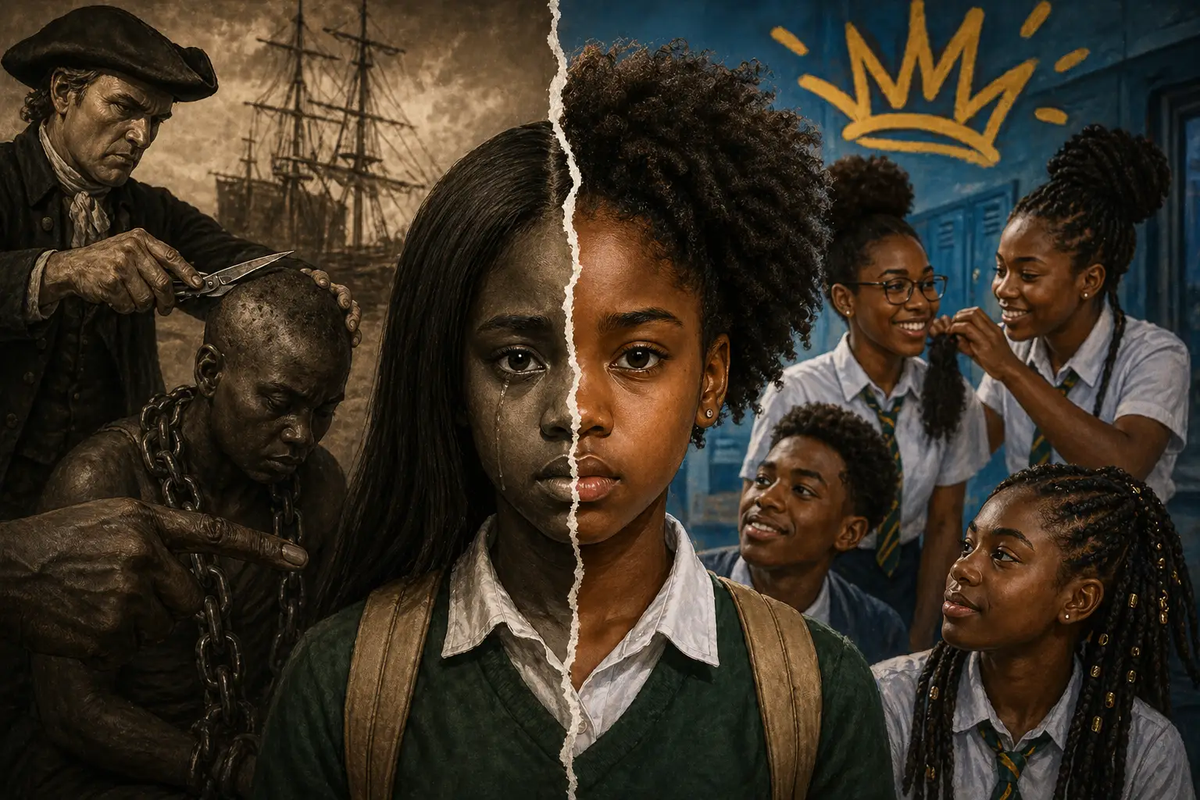
The stigma surrounding children's hair in the Caribbean has deep roots in slavery and colonial rule, and according to Antigua News Room, it continues to shape the experiences of young people in schools, homes, and communities today.
Children across the region regularly face harsh and dehumanizing criticism about their hair — its texture, volume, and natural styles. This stigma persists through school policies, societal double standards, and internalized self-perception, all of which pressure young people to reject their natural hair rather than embrace it.
The practice of cutting or shaving the hair of enslaved people was a deliberate tool of dehumanization during the transatlantic slave trade and the era of chattel slavery. African hair was once a profound symbol of tribal identity, social status, and spirituality. During slavery, however, Europeans frequently classified Afro-textured hair as closer to animal wool or fur than human hair. Slaveholders shaved the heads of enslaved people as a marker of lost freedom, punishment, and humiliation — stripping them of identity and individuality.
That legacy of control has not disappeared. Today, children are still told to cut their hair in order to appear "tidy" or "neat," and in some cases students are denied access to classrooms and education because of hair policies shaped by this history.
The double standard is stark. When a Black person grows their hair out, they are often met with insults describing it as "untidy" or "nasty." When a white person does the same, their hair is frequently praised as "nice" or "healthy." This disparity exposes a deep-rooted bias in how beauty and professionalism are defined — one where Eurocentric features are normalized and celebrated while natural Black hair is policed and criticized. These attitudes are not harmless. They shape how young people see themselves and how they believe they must present themselves to be accepted. Many students are pressured to cut, straighten, or alter their hair to comply with rules that were never designed with them in mind.
Many Black individuals have, at some point, struggled to accept their natural hair because of these persistent societal pressures and negative stereotypes. Given this long history, the letter argues, Black communities should recognize and celebrate the fact that younger generations are increasingly embracing their natural hair with pride — rather than continuing to enforce the very stigma that originated under slavery.
The stigma around Black hair must be challenged, not perpetuated. Schools, communities, and society at large have a responsibility to respect natural hair without bias.