A judicial review brought by a Jolly Harbour freeholder is placing the regulatory conduct of the Antigua Public Utilities Authority (APUA) under the scrutiny of the High Court, in a case that asks whether the country's principal utility regulator has lawfully addressed the supply of water and electricity to approximately 850 freehold parcels within the gated community. According to Antigua.news, the case centres on whether APUA has effectively abdicated its statutory responsibilities.
Cyprian Kowalczyk filed proceedings (ANUHCV2025/0559) after writing to APUA on 29 October 2025 and receiving no substantive reply. His amended claim contends that APUA has failed to apply its mind, as required under the Public Utilities Act Cap. 359 (PUA), to whether and how Caribbean Developments (Antigua) Limited (CDAL) may lawfully supply, distribute and sell water and electricity through the Jolly Harbour distribution network.
Under the PUA, APUA holds the exclusive statutory right to supply and sell water (section 7) and electricity (section 5). Any third party doing so requires written permission, a delegation made with ministerial approval (section 9), and tariffs approved under section 15. The Act creates criminal offences for unauthorised supply and resale.
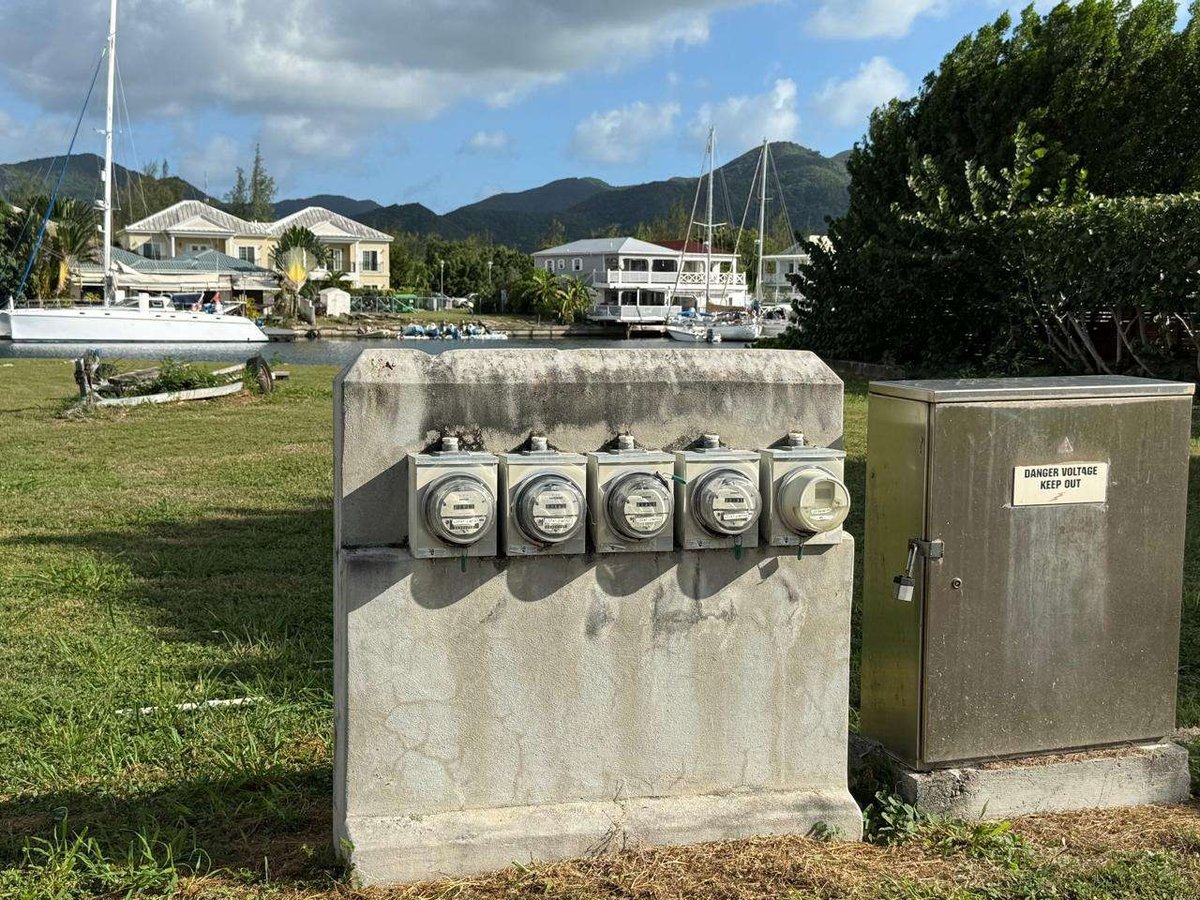
Kowalczyk's claim relies on APUA's own Freedom of Information response of 19 January 2026, which recorded no permission, no delegation, and no approved tariff held by CDAL. APUA's attorneys subsequently wrote, on 19 and 25 February 2026, that the Authority's responsibility is "limited to the supply and metering of utilities to the two main meters registered to CDAL." Everything beyond those bulk meters — the individual metering of every parcel, the invoicing of every freeholder, and the threat of disconnection for non-payment — is, on APUA's stated position, outside its concern. That position, the claim argues, is the precise regulatory failure the Court is being asked to address.
Kowalczyk says that neither he nor, to his knowledge, any of the approximately 850 freeholders has been provided with a written utility service agreement by CDAL. He says there are no terms and conditions filed with the regulator, no tariff approved under section 15 and published in the Gazette, and no formal complaints procedure. Freeholders receive invoices and demands, yet the regulatory framework Parliament established under the PUA does not reach them.
A further complication arises from a 2011 letter sent by CDAL's General Manager to Jolly Harbour property owners, stating that "APUA has granted a licence to CDAL to supply and distribute electricity" and that "CDAL is not bound by APUA's pricing." APUA's 2026 records show no such licence on file. Kowalczyk contends the discrepancy is itself a matter requiring the Authority's consideration.
In his own case, Kowalczyk says that when he completed the purchase of his parcel in 2021, CDAL conditioned the connection of utilities on a payment of over $200,000 — a sum the company associated with maintenance charges said to be owed in relation to the previous ownership of the parcel. The recoverability of that payment is the subject of separate proceedings he has brought against CDAL. At the relevant time, the materials before the High Court indicate that CDAL held no section 5(2) permission, no section 9 delegation, and no section 15 tariff that would have permitted such a charge.
Kowalczyk argues this entry-point conditioning is the unregulated counterpart to a practice the High Court has already ruled against. In Coleman v CDAL (ANUHCV2013/0029), the Court ruled CDAL's disconnection of utilities for disputed water charges unlawful. In Bigler v CDAL (ANUHCV2021/0079), the Court questioned whether CDAL held APUA authorisation to provide utilities at Jolly Harbour at all, and ruled disconnection for non-payment of community charges unlawful.
A further strand of the claim concerns CDAL's own financial statements, which record water losses of approximately $4.16 million between 2021 and 2025 — around 40 per cent of all water delivered through the bulk meters. In a properly regulated utility, those losses would ordinarily be absorbed within an approved metered tariff. Kowalczyk says they have instead been included in extra-contractual demands for which no tariff has been approved.
The case also draws on a longer institutional history. In 2005, PricewaterhouseCoopers, reviewing CDAL's community-charge methodology, observed that Jolly Harbour appeared to have been set up "as a 'fiefdom' instead of a traditional community structure." A 2001 KPMG review had earlier found cost-allocation practices to be inadequate and arbitrary. Two decades on, Kowalczyk argues, the same structural problem now reaches into utility supply that the PUA reserves to a regulated, tariff-approved framework.
The judicial review does not ask the Court to impose any particular regulatory outcome. Following the Padfield line of cases — including the decision of Madam Justice Blenman, now of the Eastern Caribbean Court of Appeal, in Francis v Public Utilities Authority (ANUHCV2006/0452) — Kowalczyk seeks an order of mandamus directing APUA to consider and determine, according to law, the regulatory status of CDAL's supply, distribution and sale of water and electricity, including the conditioning of new utility connections at the point of sale or transfer of any parcel.
The matter is expected to come before the High Court in the coming weeks.