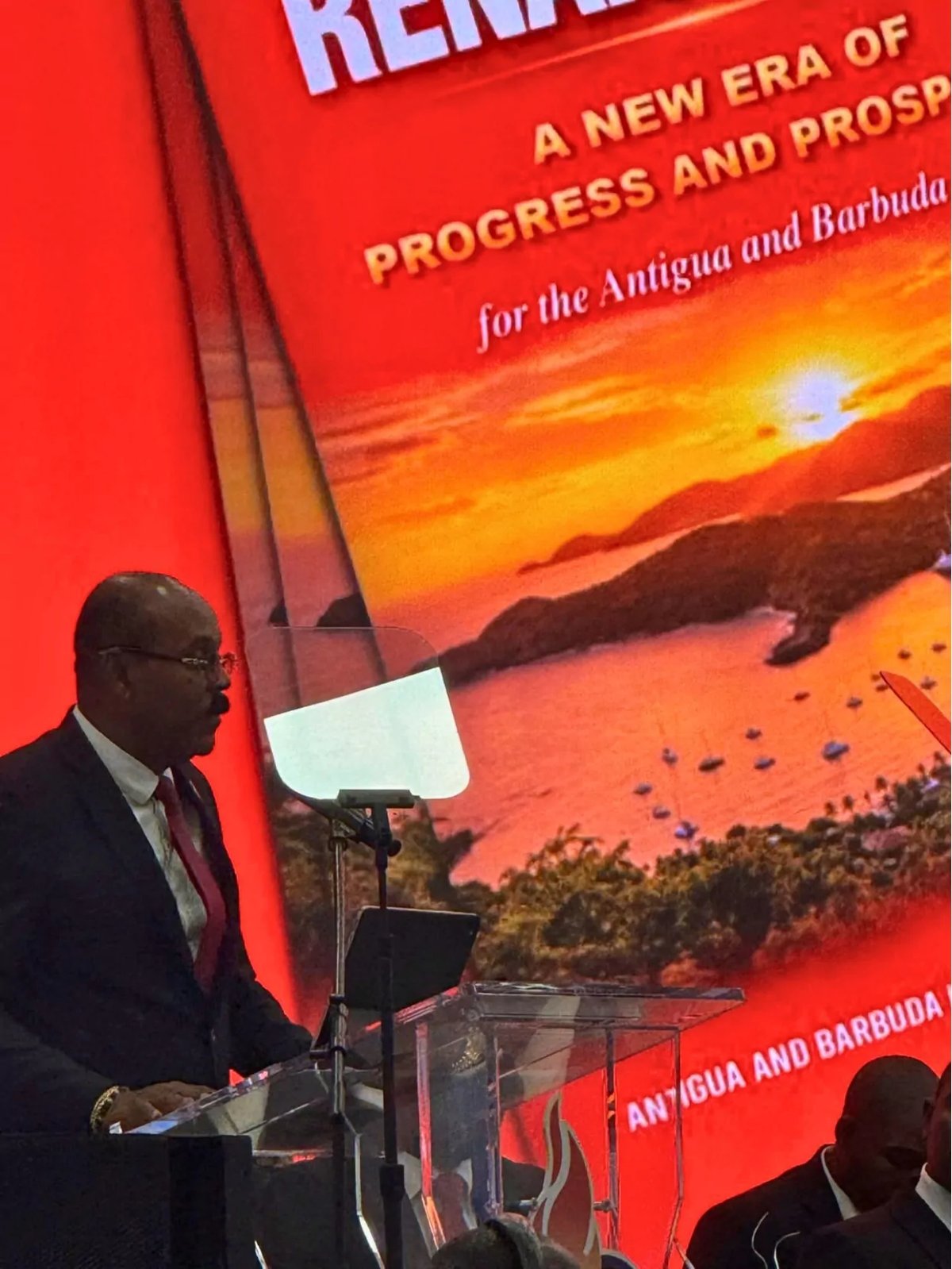
Prime Minister Gaston Browne has mounted a robust defence of Antigua and Barbuda's Citizenship by Investment Programme (CIP), disclosing that the scheme has generated more than EC$1.4 billion in non-tax revenue over the past decade. According to Antigua.news, Browne made the remarks during the launch of the Antigua and Barbuda Labour Party's 2026 manifesto at the American University of Antigua on Monday.
Browne dismissed calls to abolish the programme, cautioning that its elimination would leave a significant gap in government finances. "Since its establishment, the programme has generated more than $1.4 billion in non-tax revenues for the people of Antigua and Barbuda. Let me repeat—$1.4 billion in 11 years," he declared.
The Prime Minister stressed that CIP revenues have directly financed critical national priorities. "It is real, measurable income. It has helped to finance pensions, healthcare, education, scholarships, public safety, water, roads and housing," he said.
Browne also connected the programme to the government's ability to sustain its no personal income tax policy. "It has done so while helping to spare our people the burden of personal income tax and other heavier taxation. That is the reality," he added.
Turning to critics of the CIP, Browne challenged them to offer concrete alternatives. "Those who call for the programme to be abolished have a duty to tell the country what they will do instead. Tell us where this compensatory revenue will come from," he said.
He pressed further, asking what fiscal consequences abolition would bring. "What taxes would they impose? What services would they cut? What development would they postpone?" he questioned.
Browne also highlighted the programme's role in sustaining employment, noting that thousands of direct and indirect jobs are tied to CIP-linked investments and projects. "Are you saying that all of the workers involved in CIP-supported projects should be sent home?" he asked.
The Prime Minister made clear that his administration has no intention of scaling back the programme. "The Antigua and Barbuda Labour Party administration will not be reckless in dismantling a programme that has supported the people of this country and strengthened the national economy. It will not happen under my leadership," he stated.
Instead, Browne pledged to reinforce and better regulate the scheme. "We will continue to defend it, we will continue to strengthen it, and we will continue to regulate it properly in the national interest," he said.
The CIP remains a central pillar of Antigua and Barbuda's economic model, particularly as a mechanism for funding large-scale infrastructure without increasing the tax burden on residents.