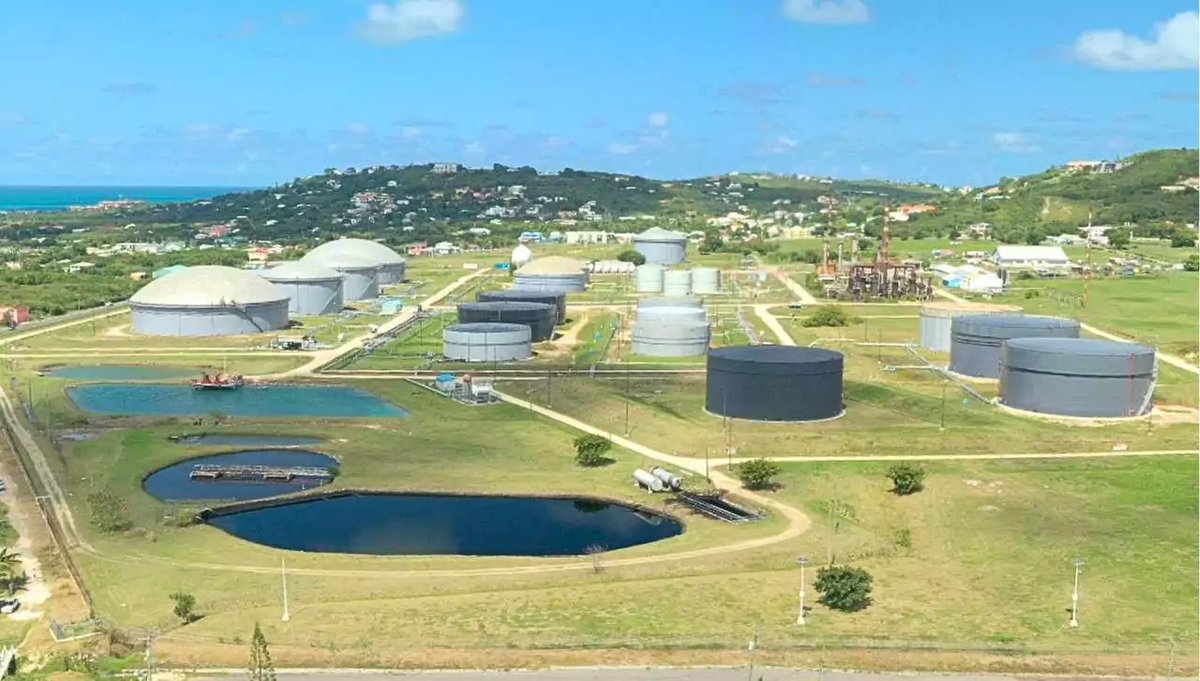
The Cabinet of Antigua and Barbuda has commemorated eleven years since Prime Minister Gaston Browne's decision to transfer ownership of the West Indies Oil Company (WIOC) to the people of the nation, calling it one of the most transformative economic policies in the country's modern history.
According to Antigua.news, the agreement — signed on April 1, 2015 — shifted control of the national fuel company into local hands, a move officials say has delivered substantial financial returns and significantly strengthened the country's energy sector.
Since the transition, WIOC has generated more than EC$230 million in profits and invested approximately EC$270 million in capital development and infrastructure. Those investments have expanded fuel storage capacity, improved distribution networks, and enhanced Antigua and Barbuda's standing as a growing fuel transshipment and storage hub in the Eastern Caribbean.
A major milestone came in 2022 when WIOC became the first Antiguan company to be publicly listed on the Eastern Caribbean Securities Exchange, enabling citizens to directly purchase shares and benefit from dividends and long-term capital growth.
The company has also undertaken significant operational upgrades, including rehabilitation of the Sea Island Jetty, installation of new pipelines, expansion of tank storage, and improvements across its retail service station network. These developments are expected to boost efficiency, increase tanker traffic, and reduce fuel import costs over time.
Beyond its domestic operations, WIOC has been exploring regional opportunities in markets such as Guyana and Suriname, while continuing to expand its local customer base through increased fuel supply to hotels, restaurants, housing developments, and marina projects.
Officials say the company is also positioning itself to enter the renewable energy sector, aligning with national goals to transition toward sustainable energy while maintaining energy security.
Cabinet noted that the 2015 decision has not only strengthened WIOC as a profitable enterprise but has also created opportunities for national wealth generation, employment, and broader economic diversification. The Government reaffirmed its commitment to policies aimed at increasing local ownership of national assets and building long-term economic resilience for future generations.