The Cabinet of Antigua and Barbuda has approved a landmark national policy to establish Spanish as the country's official second language, signalling a significant shift in the nation's educational and regional development strategy.
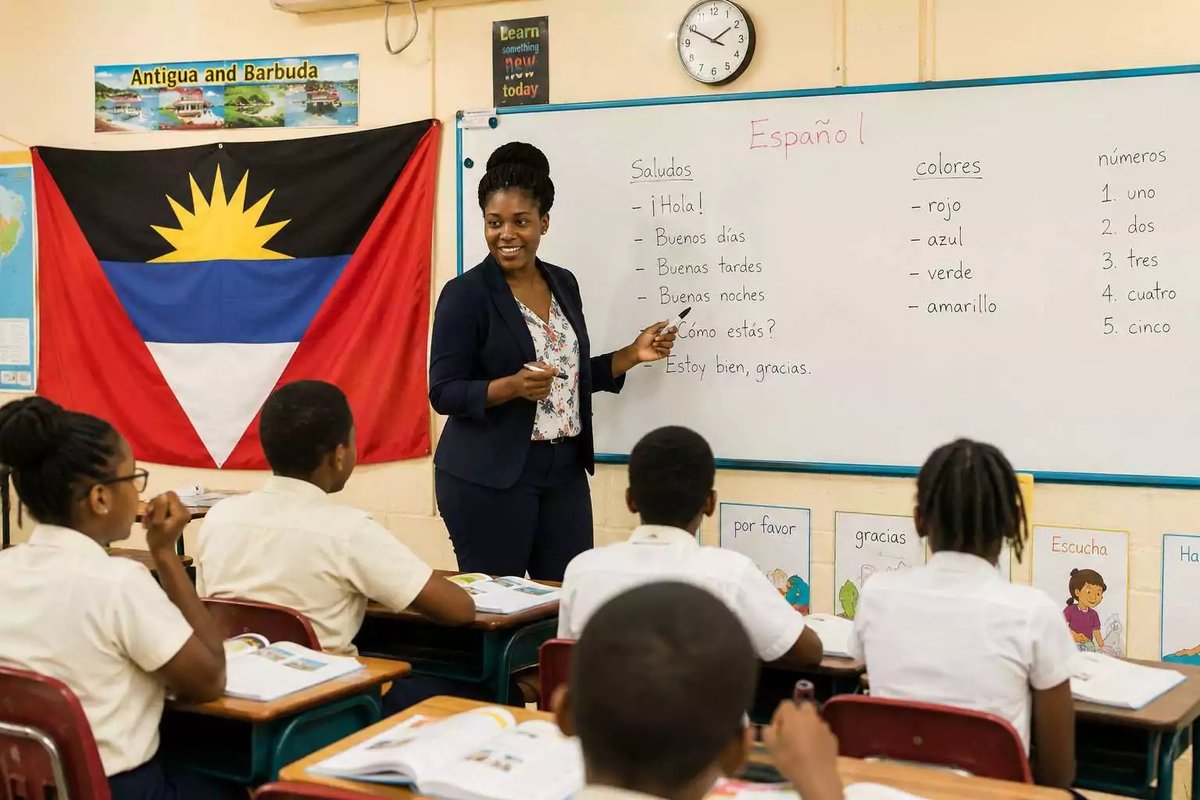
Cabinet has instructed the Ministry of Education, Science and Technology to begin restructuring the national curriculum so that Spanish becomes a core subject at the pre-school, primary and secondary school levels.
The move is designed to prepare future generations to engage more effectively with the wider Latin American and Caribbean region, while expanding opportunities in education, business, tourism, diplomacy and employment. Cabinet stated the decision reflects Antigua and Barbuda's growing regional and international engagement and recognises the increasing importance of multilingualism in an interconnected global environment.
The Government also cited the longstanding relationship between Antigua and Barbuda and the Dominican Republic as a key driver behind the initiative. Cabinet acknowledged the contribution of the Dominican community to national development and the strong cultural and people-to-people ties shared between the two countries.
Officials believe improved Spanish language competency among citizens and residents will strengthen communication, enhance workforce competitiveness, boost tourism and trade, and deepen regional integration with Spanish-speaking nations across Latin America and the Caribbean.
As part of the broader initiative, Cabinet also approved the DRIP programme — the Dominican Republic Integration Programme — which is expected to strengthen economic, cultural and institutional cooperation between Antigua and Barbuda and the Dominican Republic. The programme will focus on improving trade and investment opportunities, enhancing cooperation in tourism and education, and providing more structured support for Dominican nationals living in Antigua and Barbuda.
Cabinet additionally approved the establishment of a Spanish Desk within the Office of the Prime Minister. The unit will serve as a direct point of contact for the Spanish-speaking community and is expected to improve communication, access to government services and community integration.
The Government described the policy as part of a wider commitment to inclusion, education reform, regional cooperation and national development as Antigua and Barbuda positions itself to thrive in an increasingly globalised world.