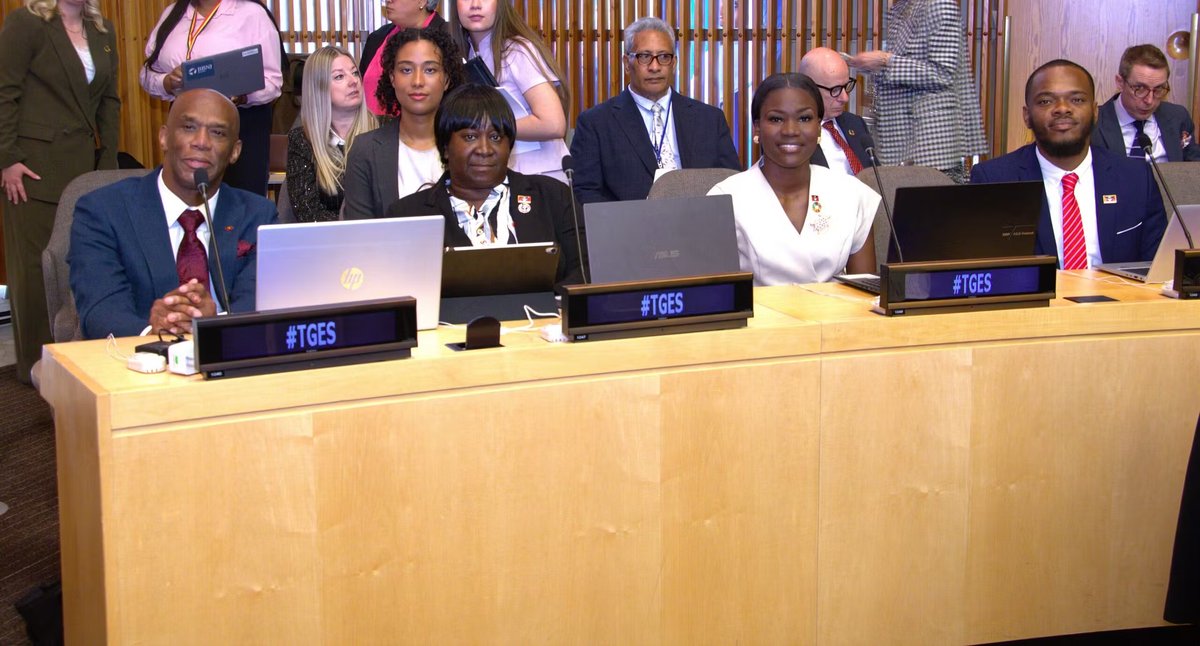
Antigua and Barbuda played a prominent role at the Transforming Global Education Summit held at the United Nations Headquarters in New York on May 1st, with a five-member delegation leading key discussions on the future of global education.
The delegation was led by Director of Education Clare Browne and included Dr. Jrucilla Samuel, Director of Youth Affairs; Chevaughn Burton, Assistant to the Focal Point for Safe Schools in the Ministry of Education; Janet Simon, CARICOM Youth Ambassador; and Pia Nichols, President of the National Youth Volunteer Corps.
The summit was convened by the PVBLIC Foundation in collaboration with the governments of Antigua and Barbuda, the Kingdom of Tonga, and the Learning Economy Foundation.
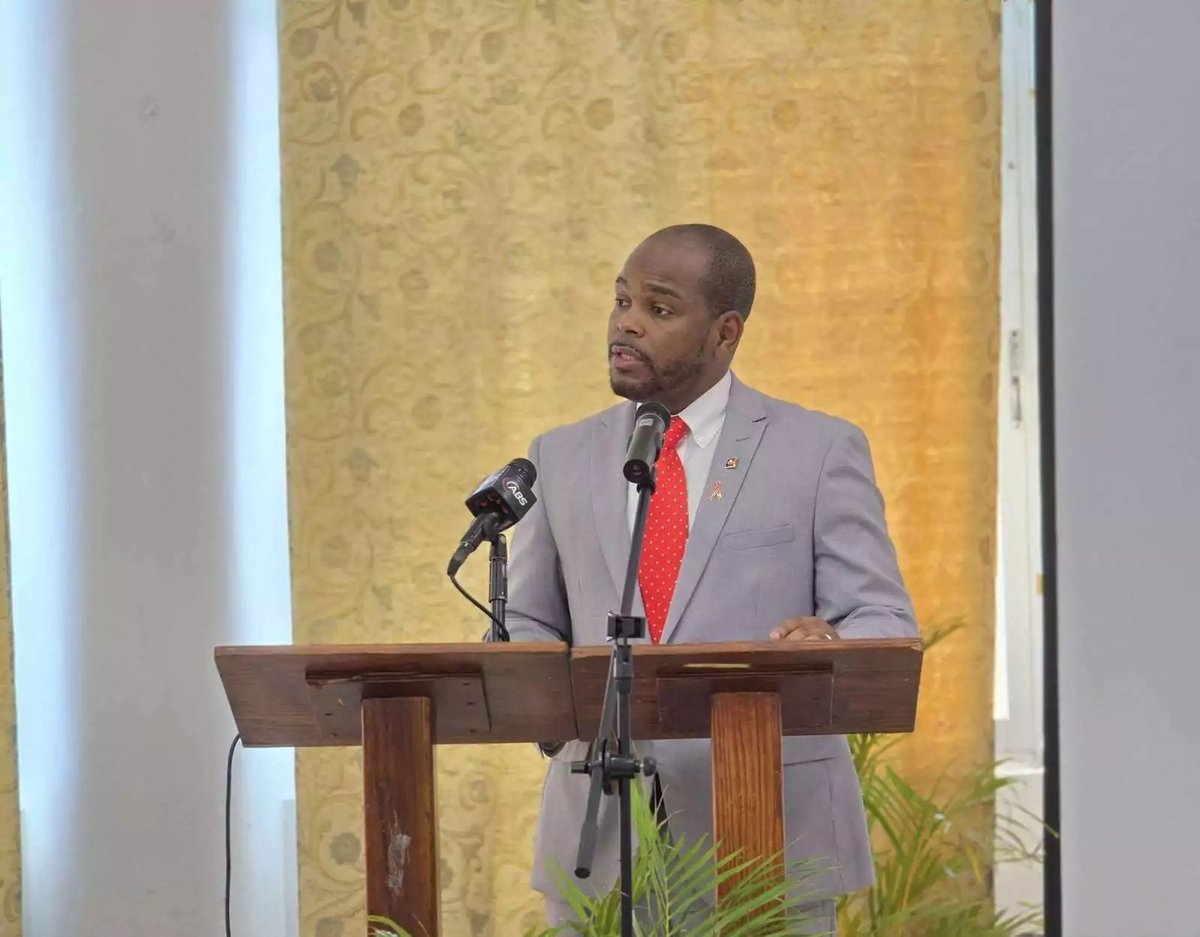
Browne delivered opening remarks and participated in two panel discussions, articulating Antigua and Barbuda's vision for education reform. "Transformation does not begin with scale, it begins with coherence, discipline, and intentional design. In Antigua and Barbuda, digital transformation is not a standalone goal, but an enabler of education reform, workforce readiness, and national resilience," he said.
Browne also pushed back against the tendency to overlook smaller nations in global policy conversations. "Too often, global conversations focus on large-scale systems. But Small Island Developing States like Antigua and Barbuda are not peripheral — we are practical leaders."
Dr. Samuel moderated the Antiguan panel, which addressed the summit theme: "Redefining Education Systems for the Future: Integrating Mental Health, Nutrition, and Holistic Youth Development as Global Priorities." She described the three younger panellists — Burton, Simon, and Nichols — as representing "the intersection of education, volunteerism, and safety."
Burton spoke to how Small Island Developing States are ensuring school infrastructure supports both quality education and disaster resilience. "Disaster risk reduction is increasingly being integrated into everyday school experiences, not treated as a one-off lesson. In line with SDG 4, we are equipping students with relevant life skills that prepare them for real-world challenges," he said.
Simon outlined practical strategies for embedding mental health and nutrition into daily teaching. "We are not asking teachers to carry more, but to embed health and wellbeing into the natural rhythm of schooling. Nutrition can be taught through practical activities — linking science lessons to healthy food choices, or using school gardens as living classrooms. Mental health can be supported through simple daily practices such as mindfulness breaks, peer support groups, and open classroom discussions that normalize emotional wellbeing."
Nichols examined volunteerism as a strategic tool for addressing socio-economic disparities in education. "Government services often have a reach limit due to budget or staffing constraints. More volunteers inside and outside schools can help address the non-academic pillars of development, including mental health, nutrition, and social stability," she noted.
The summit's overarching theme, "Redefining Education as Global Infrastructure," framed education as a cornerstone of resilience, equity, and sustainable development.
The Antigua and Barbuda Permanent Mission to the United Nations coordinated the delegation's participation. First Secretary Claxton Duberry provided lead support, while Second Secretary Dr. Jerri-Anne Jeremy accompanied the delegation throughout the meetings.